Don't Let An Improper 316 Liquid Cooling Pipe Bend Ruin Your Fluid Dynamics
Stainless Steel Liquid Cooling Tubes: Why Pipe Quality Makes or Breaks Your AI Data Center Uptime

A liquid cooling loop is only as reliable as its weakest joint. In AI data centers and CDU systems, that joint is often the stainless steel tube carrying coolant between server racks. This guide examines how tube manufacturing quality - specifically material grade, weld integrity, and internal surface finish - directly determines your system's leak risk, maintenance cost, and total uptime.
The Hidden Cost of Tube Failure in Liquid Cooling Systems
Liquid cooling for AI hardware is a closed-loop system. Every server depends on continuous coolant flow, and there is no room for partial failure. When a tube leaks or degrades, the result is rarely a simple fix. The system drains, the affected rack shuts down, and the cooling loop must be flushed and refilled. The cost is twofold: the downtime itself and the labor to recover.
| Risk Scenario | Specific Loss | Root Cause in Tubing |
| Weld zone micro-crack develops after 6 months of operation | Coolant leaks into server tray; rack shutdown; 8–12 hours of downtime for drain and repair | Inconsistent weld penetration or insufficient shielding gas control |
| Internal surface particles accumulate in cold plate channels | Cooling efficiency drops 10–15%; higher fan speeds; reduced server performance under load | Internal surface roughness above Ra 1.0 μm traps particles |
| Tube dimensions vary between production batches | Tubes don't align with CDU manifolds; installation rework; project delay | Weak dimensional control in forming or wall thickness tolerance |
The data underscores the stakes: liquid cooling systems in high-density computing environments can lose up to 15% of heat-exchange efficiency from particulate fouling before the issue is even diagnosed. That translates directly into higher operating temperatures and reduced compute performance - at a time when every watt of thermal headroom counts
What Actually Determines Tube Quality in Liquid Cooling Applications
Not all stainless steel tubes meet the demands of liquid cooling circuits. The application requires a specific combination of material properties, manufacturing precision, and cleanliness far beyond standard industrial piping. Three factors separate a tube that performs for years from one that fails during your warranty period
- Weld Quality Is the First Line of Defense
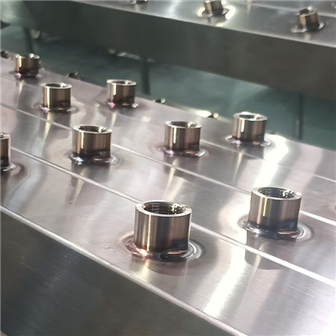
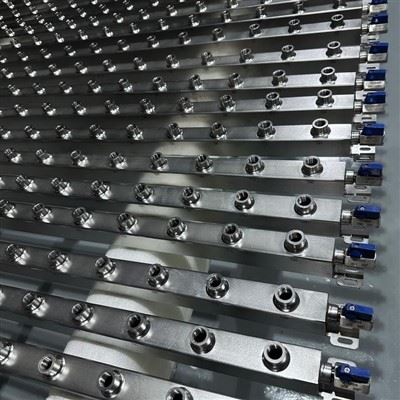
The weld zone is the structural weak point in any liquid cooling tube. A controlled welding process - including orbital welding technology - produces consistent weld penetration and reduces the risk of fatigue cracks under pressure cycling. This matters because cooling loops undergo daily thermal expansion and contraction. A weld with inconsistent fusion will eventually develop micro-cracks, leading to slow leaks that can go undetected until coolant levels drop noticeably.

-
Internal Surface Finish Determines Long-Term Efficiency
The inside of a cooling tube is where performance is won or lost. A smooth internal surface - roughness down to Ra ≤0.4 μm - minimizes particle accumulation and maintains consistent coolant flow. Standard industrial tubes often have internal roughness above Ra 1.0 μm, which creates turbulence and traps contaminants. Over time, this reduces heat transfer efficiency and increases pump work to maintain flow rate.
-
Material Grade Should Match Your Coolant Chemistry
The choice between 304 and 316L stainless steel is not a cost decision - it is a corrosion decision. For systems using deionized water, 304 offers a cost-effective solution. For glycol-based coolants or chloride-containing environments, 316L's molybdenum content provides significantly better resistance to pitting and crevice corrosion. Selecting the wrong grade for your application is the fastest way to shorten system life.

How to Evaluate and Verify Tube Supplier Capability
When assessing a liquid cooling tube supplier, you are evaluating their ability to control a complex manufacturing process. Sample quality alone is insufficient - you need evidence of process control across batch production.
| Evaluation Dimension | What to Check | Industry Baseline vs. Specialized Capability |
| Manufacturing process | Orbital welding capability, internal surface treatment (polishing/pickling/passivation) | General: manual welding, no internal finish control. Specialized: controlled welding with 100% leak inspection |
| Internal cleanliness | Request roughness measurement (Ra value) on internal surface | General: Ra >1.0 μm. Specialized: Ra ≤0.4 μm |
| Batch consistency | Check dimensional variation across production lots; ask for MTRs | General: variation up to ±0.1 mm. Specialized: consistent within strict tolerance, verified per batch |
| Quality documentation | ISO 9001, ISO 3834 welding certification, full MTR traceability | Standard: ISO 9001 only. Specialized: ISO 3834 + 100% leak testing + full material traceability |
| Delivery reliability | Production capacity vs. your expected order volume | General: limited capacity spikes. Specialized: 12,000 tons annual capacity absorbs demand spikes |
| Supply chain control | Does supplier integrate forming, welding, machining, and inspection in-house? | General: outsourced steps increase coordination risk. Specialized: in-house integration ensures consistency |
The table above reflects a practical distinction: "general" suppliers provide standard tubes that work in low-demand applications. "Specialized" suppliers (what you need for AI infrastructure) build their entire process around liquid cooling requirements - leak prevention, coolant compatibility, cleanliness, and long-term stability.
Steps to Securing a Reliable Liquid Cooling Tube Supply
Follow this sequence to minimize risk when sourcing liquid cooling tubes for your project:
- Step 1: Define your operating conditions. Document your coolant type (glycol-based, deionized water), temperature range, operating pressure, and required flow rate. These parameters determine the material grade (304 vs. 316L) and wall thickness you need.
- Step 2: Request internal roughness specifications. Do not accept generic "smooth finish" claims. Ask for a specified Ra value on the internal surface. Where the application demands precision cooling, request Ra ≤0.4 μm and require the supplier to provide measurement documentation.
- Step 3: Verify welding process control. Ask whether the supplier uses orbital welding and whether they hold ISO 3834 certification. Inquire about their pre-shipment leak testing procedure - it should be 100% inspection, not sampling.
- Step 4: Demand material traceability. Every delivered batch should come with a Material Test Report (MTR) that traces to the original mill. This ensures the 316L grade you specified is what you received - verified by chemical composition analysis per ASTM A312.
- Step 5: Assess batch consistency guarantees. Ask how the supplier controls dimensional variation across batches. High-quality processors implement incoming material verification, in-process dimensional checks, and final inspection against documented tolerances. Inquire whether every batch's performance is monitored-this is a reliable indicator of quality consistency.
- Step 6: Validate delivery reliability. Your project milestones are non-negotiable. Confirm the supplier has the production capacity to support both your initial order and future expansion. A manufacturer with 12,000 tons of annual production capacity - integrated across forming, welding, surface treatment, machining, and inspection - will not queue your order behind an overcrowded schedule, enabling urgent requests to ship in days rather than weeks.
- Step 7: Evaluate the complete quality documentation package. A supplier who can provide inspection reports, welding quality records, and production information on request is a supplier who is confident in their process. This documentation also speeds up your internal vendor approval cycle.

Why Supplier Experience Matters More Than Unit Price
Early in your supplier search, one number will stand out: price per meter. It is a tempting metric because it is easy to compare. But it is the wrong metric for a component that lives inside a closed-loop cooling system for years.
The real metric is total cost of ownership (TCO). Consider a 316L stainless steel liquid cooling tube that costs 8% more per unit but ships with dimensional consistency verified per batch, a weld integrity that passes 100% leak inspection, and internal surface treatment at Ra ≤0.4 μm. Your project saves on installation - because tubes align with CDU manifolds without rework. You save on maintenance - because the smooth interior resists particulate fouling, extending the coolant replacement cycle from 12 to 36 months. And you save on risk - because every batch arrives with full material traceability.
The alternative - a cheaper tube with less process control - is a gamble where the downside is a leaking weld during peak heat load. As one data center operator put it: "A small leakage problem in liquid cooling can create a very expensive failure."
Ensuring Reliability Beyond the Product: Manufacturing Standards and Certification
The stainless steel tube itself is the engineered core of your liquid cooling system, but the supplier's manufacturing integrity is what protects your uptime. A quality-driven manufacturer maintains documented quality management across the entire production chain - not just in the final inspection station.
- Certified quality management. ISO 9001 certification indicates the manufacturer operates standardized control across material inspection, production processes, and testing procedures. Weld quality is governed by ISO 3834 certification, which is important for components where leakage prevention is a key requirement.
- Full-process quality traceability. Quality control should cover the complete manufacturing chain: raw material verification, production monitoring, dimensional inspection, welding quality checks, surface treatment inspection, and final shipment approval.
- Leak testing before shipment. Every tube - not an agreed sample - should undergo a leak test. In industries where a single failure carries the cost of a full server rack, 100% batch inspection is not a premium service; it is a baseline requirement.
- Global compliance. Certifications like CE and RoHS confirm the manufacturer can support international market requirements, simplifying your regulatory approval process.

The Right Tube Grade for Your Cooling System: 304 vs. 316L
Selecting the right material grade is a decision that should be based on the specific chemistry of your cooling loop, not driven by upfront pricing. Each grade offers distinct advantages, and the choice affects long-term system reliability.
304 stainless steel is a cost-effective choice for pure water and deionized water cooling systems. It delivers reliable corrosion resistance in these environments at a lower material cost. If your system uses clean water loops and you are managing costs carefully, 304 provides a solid performance baseline.
316L stainless steel is engineered for more demanding environments. Its low carbon composition and molybdenum content deliver improved resistance to pitting corrosion, chloride environments, and long-term coolant exposure. In glycol-based coolants - standard in AI data center loops - 316L is the preferred choice for extending system life and preventing degradation over time.
Choose 316L when your coolant chemistry is aggressive or when your system must operate reliably for years without coolant replacement. Choose 304 when your application environment is well understood and your coolant is non-aggressive. The purchase price gap between the two is small; the cost of a system failure is not.
Get a Quote for Your Liquid Cooling Tube Project
When you are sourcing tubes for a critical liquid cooling infrastructure project, you need a supplier who verifies every parameter you specify and provides complete quality documentation. Share your project requirements - coolant type, tube dimensions, operating pressure, and target delivery date - and get a detailed quote from a manufacturer with 11+ years of experience, 12,000 tons annual capacity, and exports to 20+ countries.
Required information:
- Company name
- Product requirements (spec, quantity, application)
- RFQ quick form
- WhatsApp instant contact
- Technical consultation booking
- Resource download center (CAD files, PDF technical specifications, sample MTR)
- Sample request
Response commitment: A manufacturer engineer responds within 24 hours. Expedited delivery: 30% faster delivery capability for urgent projects. Sample policy: Free samples available, 7–10 days delivery.