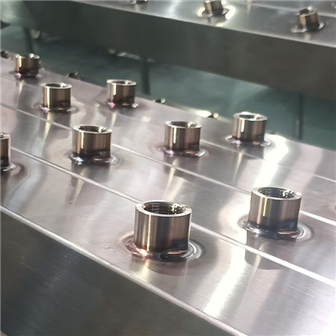
What Should You Include In An RFQ For Custom Liquid Cooling Pipe Assemblies?
What Should You Include in an RFQ for Custom Liquid Cooling Pipe Assemblies?
October 15, 2026 | Liquid Cooling Engineering & Procurement
A liquid cooling piping quotation is only as useful as the technical information behind it.
Before requesting a quotation for custom stainless steel pipe assemblies, buyers should define the material, dimensions, connection interfaces, component quantities, drawing revisions, inspection requirements and delivery scope. Missing details can lead to repeated clarification, inconsistent supplier quotations and avoidable changes after fabrication planning begins.
The 2026 OCP Global Summit, held in San Jose from October 12 to 15 under the theme "Scaling Innovation for the AI Era", placed scalable AI infrastructure and modular, open infrastructure development in the industry spotlight. For procurement teams working on data center cooling systems, this is a useful context for reviewing how technical requirements are communicated across equipment, piping and installation interfaces.
The practical question is not simply which stainless steel pipe to purchase. It is how to define the complete scope of supply so that the supplier can evaluate the requested components against the project's drawings, technical specifications and acceptance criteria.
This guide explains how to prepare a custom liquid cooling pipe assemblies RFQ for data center EPC contractors, liquid cooling system integrators, CDU and manifold suppliers, and industrial piping buyers.
1. Why Incomplete RFQs Slow Down Liquid Cooling Projects
Unspecified technical requirements
A request for "316L stainless steel cooling pipes" does not define a complete fabrication requirement. The supplier may still need the outside diameter or nominal pipe size, wall thickness, length, dimensional tolerances, end preparation, surface finish and applicable material standard.
When these details are missing, a quotation may be based on assumptions that do not match the installed system.
An unclear component scope
One buyer may expect straight pipe lengths only, while another expects cut and bent sections, welded branches, flanges, valve assemblies and finished pipe spools. Comparing these quotations without checking the scope can create a misleading picture of the actual project cost.
List every requested component and state whether it is included, excluded or still to be confirmed.
Drawings and BOM that do not agree
A bill of materials may specify a different fitting quantity from the latest isometric drawing. A revised connection location may also change the required pipe length or assembly configuration.
Identify the governing drawing revision and provide a controlled list of the documents included in the RFQ package. Flag any known discrepancy rather than expecting the supplier to guess which document is correct.
Unclear inspection and documentation requirements
Terms such as "leak tested," "cleaned" and "fully traceable" can mean different things unless the acceptance criteria are defined. A buyer may require a specific test method, a stated pressure and hold time, material certificates, weld inspection records or a cleanliness acceptance standard.
Defining these requirements before quotation helps the supplier identify the expected scope, inspection resources and documentation deliverables.
2. What Buyers Should Include in an RFQ
The following stainless steel piping RFQ checklist provides a practical starting point. Include the available information in the first submission and explicitly mark unresolved items. Not every project needs every test or document, but every applicable requirement should be identifiable.
| RFQ Item | Information to Provide | Why It Matters |
|---|---|---|
| Material grade and standard | 304, 316 or 316L as applicable; governing material standard, product form and required material certification. | Establishes the material and compliance basis for the quotation. |
| Pipe dimensions and wall thickness | Outside diameter or nominal size, wall thickness or schedule, length, tolerances, bend radius and end preparation. | Defines the physical configuration and fabrication requirements. |
| Component type and quantity | Itemized list of straight pipes, spools, bends, headers, manifolds, flanges, fittings and assemblies, with quantities and units. | Prevents omissions and makes supplier quotations easier to compare. |
| Drawings and revisions | P&ID, isometric drawings, relevant BIM files, BOM, pipe schedule and document revision identifiers. | Helps establish the intended configuration and the current design basis. |
| Connection and interface requirements | Flange standard and rating, thread type, fitting series, sealing arrangement, port orientation and mating equipment interfaces. | Reduces the risk of incompatible connections during installation. |
| Welding and inspection | Applicable welding code, joint details, required welding procedure qualifications, visual inspection and specified NDE. | Defines the required fabrication and inspection scope. |
| Leak-test method and acceptance criteria | Test method, test medium, pressure, hold time, acceptance threshold and required records. | Establishes measurable acceptance conditions for the assembly. |
| Cleaning, flushing and passivation | Required process, cleanliness or residue limits, flushing medium, drying requirements and passivation criteria where applicable. | Aligns delivered condition with the cooling system's cleanliness requirements. |
| Material traceability and documentation | Required material certificates, heat or lot identification, weld maps, inspection reports, test records and final document package. | Clarifies what must be traceable and what records must accompany delivery. |
| Packaging and delivery | Destination, required delivery date, shipping terms, protective caps, cleanliness protection, labeling and packing requirements. | Helps the supplier assess logistics and the condition required at receipt. |
| Quantity and commercial basis | Prototype, pilot or production quantities; delivery lot sizes; requested quotation validity and currency, where applicable. | Allows the supplier to prepare a quotation against a defined purchasing basis. |
Procurement tip: If a requirement is not yet finalized, write "to be confirmed" and ask the supplier to identify its quotation assumptions. An explicit open item is easier to manage than an undocumented assumption.
3. Which Drawings and Documents Should Be Submitted?
Different engineering documents describe different aspects of a piping system. A complete RFQ package should use them together, with consistent tags, item numbers and revisions wherever possible.
P&ID: Process intent and system relationships
A piping and instrumentation diagram identifies the process flow path, connected equipment, valves, instruments and relevant control relationships. It helps the supplier understand where the requested piping sits within the larger system.
Limitation: A P&ID generally does not provide all fabrication dimensions, bend geometry, exact spool lengths or detailed connection orientations needed to manufacture a custom assembly.
Isometric drawings: Fabrication geometry
Isometric drawings typically provide a more detailed view of pipe routing, dimensions, fitting locations, branch connections, weld locations and component identification, depending on the drawing standard and level of detail.
Limitation: The drawing may not contain all material, testing, cleaning or documentation requirements. These should also be stated in the relevant specification and RFQ documents.
BIM models: Spatial coordination
Building Information Modeling files can help coordinate piping routes with racks, equipment, structural elements and adjacent services. They can reveal space constraints and potential installation conflicts before fabrication.
Limitation: A BIM model should not automatically be treated as an approved fabrication drawing. Confirm model maturity, dimensional accuracy, units, coordinate references and the status of the model before using it for manufacturing.
BOM: Itemized quantities
A bill of materials identifies the components and quantities required for procurement. Depending on its format, it may include item numbers, material grades, sizes, part descriptions and assembly references.
Limitation: A BOM does not necessarily establish component positioning, spool geometry, weld locations or all connection details. It should reconcile with the approved drawings.
Pipe schedule and technical specifications: Design requirements
The pipe schedule or line list can identify line numbers, nominal sizes, material classes, wall schedules, design conditions and other project-defined attributes. The technical specification should establish applicable codes, pressure and temperature requirements, connection standards, inspection criteria and documentation expectations.
Limitation: The exact content varies by project. A pipe schedule should not be assumed to include every fabrication or acceptance requirement.
Before submission, check that the documents use compatible line numbers, spool IDs, part numbers and revision identifiers. If two documents conflict, identify the discrepancy and nominate the document or approval process that governs the final decision.
4. How to Define the Scope of Supply
For custom liquid cooling pipe assemblies, the scope should describe the complete set of items the buyer expects to receive, not simply the primary pipe material. Use an itemized supply list to show what is included and who is responsible for each activity.
| Component or Service | Details to Define in the RFQ |
|---|---|
| Straight pipes | Material, dimensions, wall thickness, cut lengths, end condition and quantity. |
| Pipe spools | Spool identification, overall dimensions, branch locations, weld details, orientation and assembly boundaries. |
| Bends and elbows | Angle, centerline radius, tangent lengths, orientation, dimensional tolerances and acceptable deformation limits. |
| Headers and manifolds | Inlet and outlet sizes, port count, spacing, orientation, connection type and any specified internal cleanliness or flow requirements. |
| Flanges and fittings | Applicable standards, pressure class, mating dimensions, sealing surfaces and material requirements. |
| Valve assemblies | Valve type, size, rating, wetted materials, end connections, flow direction and whether the valve is supplied loose or installed in the assembly. |
| Instrument assemblies | Instrument type, connection interface, installation orientation, process connection and any specified calibration or inspection documentation. |
| Supports and mounting hardware | Support locations, loads, attachment details, materials, coatings and whether structural design is included in the requested scope. |
| Inspection and finishing | Welding inspection, specified NDE, leak testing, cleaning, flushing, passivation, preservation and document deliverables. |
For each item, identify whether the supplier is expected to provide raw material, a cut-to-length part, a fabricated component, a fully assembled spool or a tested assembly ready for the next installation stage.
Also identify exclusions. For example, installation at the data center, field welding, system commissioning, instrumentation calibration or third-party inspection should not be assumed to be included unless the quotation explicitly covers them.
For relevant product categories, buyers can review the existing 316 liquid cooling pipe and 316 liquid cooling manifolds pages. Final dimensions, interfaces and assembly scope still need to be confirmed against the actual project requirements.
5. What Should Be Confirmed Before the Supplier Issues a Quote?
A supplier should not need to guess about critical technical or commercial details. When an RFQ contains gaps, the buyer and supplier should resolve the following questions or record them as explicit assumptions.
Are all critical dimensions defined?
Confirm pipe size, wall thickness, cut lengths, bend radius, branch spacing, flange orientation and installation clearances. If dimensions depend on equipment interfaces, provide the approved interface drawing or identify the responsible party for final confirmation.
Are all connections compatible?
Specify flange standards and ratings, thread forms, fitting series, seal types and mating connection details. Avoid descriptions such as "standard connector" without identifying the required interface.
Are testing requirements measurable?
State the required test method and acceptance criteria. For leak testing, distinguish the test pressure from the acceptable leakage threshold. Where a project specifies a pressure test, identify the medium, hold period and acceptance procedure. Any test must be suitable for the component design and conducted under the applicable safety requirements.
Are quantities and delivery expectations clear?
Separate prototype quantities from production quantities and identify whether the order will be released in one shipment or multiple batches. Provide the delivery destination, target date and any project milestones that affect packaging or shipment sequencing.
Is the drawing revision controlled?
Identify the revision used for quotation and explain how later design changes will be reviewed. If the BOM and drawings disagree, resolve the discrepancy before fabrication approval rather than allowing different parties to use different design versions.
Example of an effective clarification request
"The isometric drawing identifies a flanged outlet, while the BOM lists a threaded connection for the same item number. Please confirm the governing connection type and issue the corresponding revised document before fabrication approval."
This approach identifies the exact conflict and the decision needed without leaving the supplier to select an interface independently.
6. RFQ Submission Checklist
Use this checklist before sending a custom liquid cooling pipe assemblies RFQ to a supplier.
- Material grade and applicable material standard are identified.
- Pipe dimensions, wall thickness, lengths and tolerances are specified or marked for confirmation.
- Component list, quantities, units and assembly boundaries are included.
- P&ID, isometric drawings, BIM files, BOM and pipe schedule are attached where available.
- Drawing numbers, revisions and the governing design documents are identified.
- Connection types, mating interfaces and sealing requirements are defined.
- Welding, inspection and any required NDE are specified.
- Leak-test method and measurable acceptance criteria are stated.
- Cleaning, flushing, drying and passivation requirements are stated where applicable.
- Material traceability and required quality documents are listed.
- Packaging, labeling, delivery destination and target delivery date are provided.
- Prototype and production quantities, delivery batches and commercial assumptions are identified.
- Open technical questions, exclusions and items requiring customer approval are clearly listed.
You do not need to have every engineering decision finalized before contacting a supplier. However, clearly separating confirmed specifications from pending decisions helps both parties understand what can be quoted and what remains conditional.
7. Request a Quotation for Your Custom Liquid Cooling Pipe Assemblies
A well-prepared RFQ gives the supplier a clearer basis for evaluating materials, fabrication scope, connection compatibility, inspection requirements and delivery expectations. It also helps the buyer compare quotations on a like-for-like basis rather than relying on headline prices alone.
China Super Tech Co., Ltd. supplies stainless steel liquid cooling pipe and manifold products for relevant thermal management applications. For a project-specific enquiry, provide the available drawings, BOM, technical specification, estimated quantities and required delivery date so that the requested scope can be reviewed.
Submit Your Liquid Cooling Piping RFQ
To help define your quotation requirements, include:
- Current P&ID, isometric drawings or relevant BIM files.
- BOM, pipe schedule and material specifications.
- Required pipe spools, bends, manifolds, flanges, valves and other components.
- Welding, inspection, leak-test, cleaning and documentation requirements.
- Estimated quantities, delivery destination and target delivery date.
Have an incomplete drawing package? Send the documents currently available and identify the items that still require engineering confirmation.
Contact: sales@316liquidcooling.com
Review liquid cooling pipe products
Conclusion
The most useful RFQ is not necessarily the longest one. It is the one that defines the required components, design basis, interfaces, acceptance criteria and delivery scope clearly enough for the supplier to identify what is confirmed and what still needs clarification.
For custom liquid cooling pipe assemblies, submit the latest available drawings, a reconciled BOM, material and fabrication specifications, testing requirements, quantities and delivery information together whenever possible. This gives the quotation process a more consistent technical foundation and helps reduce avoidable procurement delays caused by missing or conflicting information.