Don't Leave 316 Liquid Cooling Pipe Certifications For The Last Minute—3 Risks

The AI data center upgrade was already approved. The CDU connection points were set. Then the stainless steel pipe quality documents arrived incomplete-material certifications missing, no REACH declaration. Supplier review stalled for three weeks. The server racks sat empty while the procurement team chased paperwork.
Why Certification Gaps Derail Liquid Cooling Projects
Buyers of 316 liquid cooling pipe do not purchase raw steel. They purchase a documented component that passes a supplier audit, installs without friction, and performs for a decade inside a closed coolant loop. When certification files arrive late or incomplete, the procurement cycle breaks at the verification stage-project teams that budgeted two weeks for supplier review end up spending two months on document collection and reassessment.
The 3 Risks of Delayed Certification Compliance
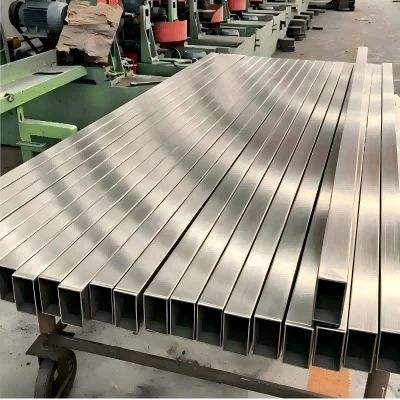
Risk 1: Material Specification Conflicts Surface at Audit Time
A 316 liquid cooling pipe sounds standardized. But when a buyer requests 316L for a CDU system, the material certification must prove low carbon content (C ≤ 0.03%) and molybdenum presence (Mo 2.0–3.0%) to confirm pitting resistance in chloride environments. Standard 316 certificates will not satisfy a reviewer who checks per ASTM A312 or JIS G3459.
Yet material grade conflicts are only the entry point. Suppliers who cannot articulate their testing scope on short notice create a deeper problem for engineering reviewers: an unverifiable claim about internal surface condition. Since coolant cleanliness depends on it, a responsible reviewer will stop the entire approval until surface roughness values are documented.
The remedy is to request a complete material documentation package-chemical composition certificates plus surface finish data-before the commercial quote conversation starts. This forces the supplier to commit to a verification standard at the specification stage, not at the delivery stage.
Risk 2: Supplier Review Cycles Extend Beyond the Project Deadline
Procurement teams evaluating a new 316 liquid cooling pipe supplier typically need: material certificates, test reports, ISO system evidence, RoHS declarations, and REACH documentation. A supplier without immediate access to these documents triggers a sequence of delays:
- The procurement engineer sends a document request
- The supplier responds after three days with a partial file
- The quality team requests the missing REACH and RoHS declarations
- Another week passes before a complete package arrives
- The review board re-schedules the approval meeting
Each round of routine follow-up adds 3 to 5 working days. Accumulated over a two-month supplier evaluation cycle, poor documentation responsiveness can push a liquid cooling project past its commissioning deadline. One data center infrastructure operator interviewed during our supplier audits stated it plainly: "A ISO 9001 certified supplier should provide both products and complete quality documentation."
What documentation should buyers request upfront? The eight files shown in the table below cover the essential verification scope for 316 liquid cooling pipe suppliers.
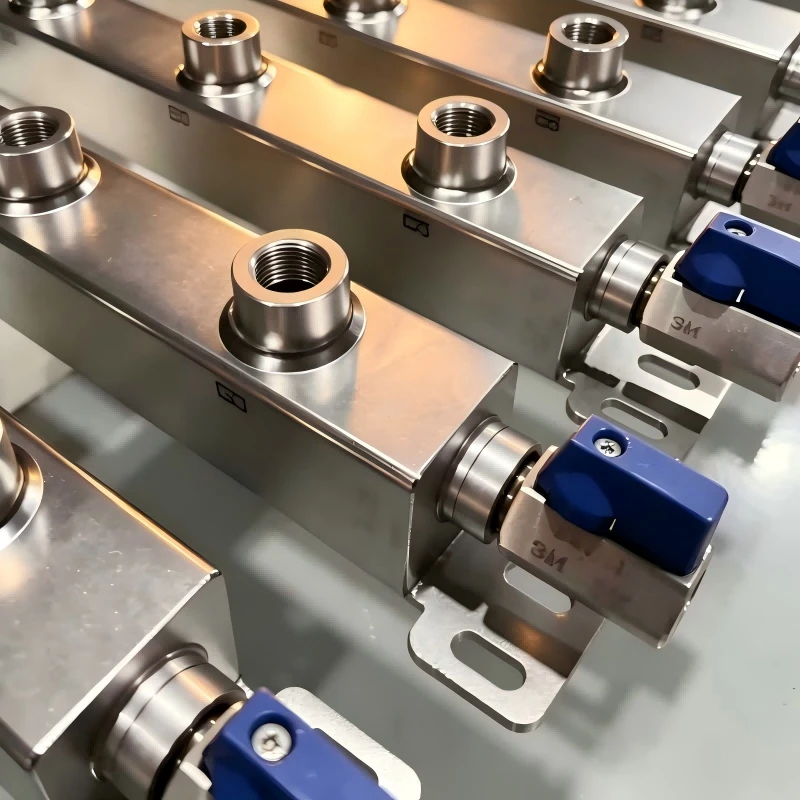
| Document Category | Specific Requirement | Verification Point |
| Material certification | Mill test certificate (MTC) per ASTM A312 / JIS G3459 | Chemical composition, 316L grade confirmation |
| Quality management | ISO 9001 certificate | Process control, traceability system |
| Welding control | ISO 3834 certificate | Welding procedure qualification, operator skill |
| Product compliance | CE, RoHS, REACH declarations | Environmental and safety compliance for EU markets |
| Dimensional report | Inspection report from production batch | Outer diameter, wall thickness, length tolerance |
| Surface condition | Surface roughness test data | Ra value confirmation for internal cleanliness |
| Leak integrity | Hydrostatic or helium leak test report | Weld joint integrity verification |
| Regulatory statement | EU food-grade compliance declaration | Material suitability for sensitive environments |
Most documentation gaps surface at this audit stage. That is why buyers who request these eight files during initial supplier screening eliminate 80% of later approval friction.

Risk 3: Weld Quality Claims Become Unverifiable After Installation
A liquid cooling pipe's most critical certified attribute is weld integrity. In service, a single pinhole leak in a welded joint of a 316 liquid cooling pipe can force an entire server rack to shut down. Because the consequences are severe, certification documents must prove weld quality before installation-not after a failure occurs.
China Super Tech applies ISO 3834-based welding quality management and controlled processes including orbital welding. Every pipe undergoes helium leak testing or pressure testing before shipment to verify connection reliability. At our Liyang facility, this translates into documented weld traceability: every welded joint links to the operator, the welding procedure, and the inspection record. For a buyer who discovers a leak after three years, this traceability is the difference between a 30-minute investigation and an entire system teardown.
Risk 4: Batch Inconsistency Emerges as a Documentation Tracer
Ask any operations manager about the most frustrating quality problem in liquid cooling projects, and the answer invariably involves an invisible process gap. A supplier's sample may pass dimensional inspection. Yet when mass production begins, tube dimensions shift, weld quality varies, and surface finish degrades-not because of a single catastrophic error, but because the process lacks consistent control points.
The documentation requirement exposes this risk early: a credible 316 liquid cooling pipe supplier maintains stable production output verified by material testing and pressure testing at defined control points. This stability means a buyer receives pipes with consistent quality regardless of whether the order runs in February or August.
Beyond leak prevention, clean internal surfaces matter. Through polishing, pickling, and passivation, we control internal surface roughness down to Ra ≤ 0.4 μm-below the threshold where particle accumulation and coolant contamination typically start. Without the surface finish data in the quality documentation package, an engineering reviewer cannot confirm this cleaning level for the entire order.

How to Lock Down Documentation Early
- For procurement managers: Include the eight-point documentation list in your initial RFQ. A supplier without immediate access to these files signals poor quality system maturity.
- For project engineers: Specify acceptance criteria at the specification stage-dimensional tolerances, welding standards, surface finish targets, leak test methods. This creates a clear verification scope against which the supplier's documentation is checked.
- For quality teams: Request a complete pre-shipment inspection report package before the final payment milestone, including pressure test and surface finish records. This ensures verification happens while the supplier still has production leverage.
Secure Your Certification Package Before Procurement Review
For engineers evaluating 316 liquid cooling pipe suppliers, documentation quality is a leading indicator of process control. A supplier with certified ISO 9001, ISO 3834, CE, and RoHS compliance has already invested in the quality systems that prevent batch inconsistencies and weld defects-the two causes of most liquid cooling failures.
Who stands behind the certification claims? China Super Tech offers complete documentation with every shipment: material certificates per ASTM A312, ISO 3834 welding certification, leak test reports, and REACH/RoHS declarations. With 11+ years of manufacturing experience, 12,000 tons annual capacity, and supply to 20+ countries, our documentation package arrives with the quote-not after a three-week chase. [Contact our engineering team] for a sample documentation package and verify the quality system before your procurement review deadline.
FAQ
Q1: What specific certifications should a 316 liquid cooling pipe supplier hold?
A: A qualified supplier should hold ISO 9001 for quality management and ISO 3834 for welding process control. Product-level certifications include CE and RoHS compliance for European markets, plus REACH documentation. Material certificates must reference ASTM A312 or JIS G3459 standards, and welding certificates relate to the ISO 3834 framework.
Q2: Why does internal surface roughness matter for liquid cooling applications?
A: A 316 liquid cooling pipe with internal surface roughness above Ra 0.8 μm creates micro-cavities where particles accumulate. Over time, these particles circulate through the coolant loop and can block micro-channels in cold plates or accelerate pump wear. China Super Tech controls internal roughness to Ra 0.4 μm through polishing and passivation.
Q3: How is weld quality verified before shipping 316 liquid cooling pipes?
A: China Super Tech conducts 100% leak inspection on every welded pipe before shipment, using hydrostatic pressure testing or helium leak detection depending on customer requirements. This complements ISO 3834-certified welding processes including orbital welding for consistent joint quality.
Q4: Can certification documents be provided before ordering?
A: Yes. Request material certificates, ISO certificates, and compliance declarations before the purchase order. Technical drawings receive review within 24 hours. Suppliers who provide these documents upfront accelerate your procurement approval cycle by several weeks.
Q5: What is the typical lead time after documentation approval?
A: Standard 316 liquid cooling pipe orders ship within 7–15 working days after documentation and specification confirmation. Urgent projects can complete in approximately 30% less time with expedited production scheduling.
Q6: How does China Super Tech support international regulatory requirements?
A: China Super Tech products comply with CE and RoHS requirements, and REACH documentation is available on request. This regulatory package helps global customers clear customs and pass supplier audits without additional qualification delays.