

Finned Condenser Tube for Industrial Thermal Management & Liquid Cooling Systems
Brief Product Positioning
Engineered for thermal management loops requiring extended surface heat dissipation, this component increases the external surface area of base tubing to optimize fluid-to-air or fluid-to-fluid heat exchange. Fabricated from corrosion-resistant austenitic stainless steels, the structure prevents thermal degradation in closed-loop cooling systems, data center server racks, and battery energy storage units operating under continuous thermal loads.
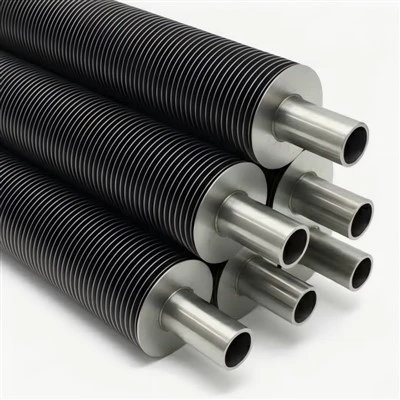


High-Frequency (HF) Welded Finned Tube
Manufacturing Process: Solid fin strip is continuously helically wound and resistance-welded to the moving base tube via high-frequency electrical current.
Structural Characteristic: Forms a metallurgical bond between fin and tube, eliminating thermal contact resistance and securing structural stability under high thermal cycling and vibration.
Primary Use: Heavy-duty server racks, industrial chillers, and semiconductor processing equipment skids.
Manufacturing Process: Formed by cold-rolling metal out of an outer sleeve or directly from a thick-wall base tube using tooling rollers.
Structural Characteristic: Seamless integration of fin and tube wall with zero thermal barrier; provides a smooth internal bore and robust outer surface resistant to mechanical impact and dust accumulation.
Primary Use: Battery energy storage systems (BESS) and high-performance computing (HPC) cooling loops.
Manufacturing Process: Tension-wrapped fin strips mechanically anchored into a machined groove or overlapped onto the base tube exterior.
Structural Characteristic: Accommodates material combinations where dissimilar metals are required; optimized for moderate temperature applications.
Primary Use: Commercial refrigeration condensers and secondary-loop HVAC heat exchangers.
Technical Specifications
| Parameter Category | Specification Range / Option |
| Base Tube Outer Diameter (OD) |
8.0 mm to 50.8 mm (0.315 in to 2.0 in) |
| Base Tube Wall Thickness |
0.8 mm to 3.0 mm (0.031 in to 0.118 in) |
| Fin Height |
6.0 mm to 16.0 mm |
| Fin Pitch (Density) |
2.1 fins/mm to 6.3 fins/mm (4 to 14 fins per inch - FPI) |
| Fin Thickness |
0.3 mm to 0.8 mm |
| Maximum Length |
Up to 12,000 mm (custom cut-to-length available) |
| Dimensional Tolerances |
Outer Diameter: +/-0.15 mm; Wall Thickness: +/-10 percent |
Material Grades
Stainless Steel 304 / 304L (UNS S30400 / S30403): Standard selection for general industrial water and glycol cooling loops; offers balanced corrosion resistance and mechanical strength.
Stainless Steel 316 / 316L (UNS S31600 / S31603): Alloyed with Molybdenum (Mo) to resist pitting and crevice corrosion in marine environments, chemical processing, and closed-loop deionized water systems.
Special Alloys: Available upon request for specific chemical compatibility requirements.
Surface Finishes
As-Welded / As-Rolled: Standard industrial surface condition retaining mill finish tolerances.
Passivated: Chemical treatment conforming to ASTM A967 to remove free iron and enhance surface chromium oxide passive film formation.
Electropolished: Mechanically and electrochemically smoothed internal and external surfaces (Ra <= 0.4 um) to minimize particulate accumulation and fluid flow friction.

Applications
Data Center Server Racks:
Liquid-to-air heat rejection units within high-density computing enclosures.
Industrial Refrigeration & Chillers:
Condenser coils handling high-pressure refrigerants (R410A, R134a, R744/CO2).
Battery Energy Storage Systems (BESS):
Thermal management piping loops maintaining uniform cell temperatures within containerized units.
Semiconductor Fabrication Equipment:
Precision temperature-control skids circulating chilled water or specialized heat transfer fluids.
Manufacturing & Quality Control
Manufacturing Equipment
Continuous High-Frequency Induction Welders: Precise heat input control prevents metallurgical grain growth in stainless steel substrates while establishing a uniform fusion zone.
Multi-Roller Cold Forming Benches: Synchronized roller assemblies shape exterior fins without inducing localized wall thinning or residual stress cracking.
CNC Tube Cutting & Bending Stations: Automated handling equipment ensures tight radius control for U-bends and coiled configurations.
Quality Control & Testing Protocols
Hydrostatic Pressure Testing: Each production lot undergoes internal hydrostatic pressure testing in accordance with ASTM specifications to verify burst and leak resistance.
Pneumatic Leak Testing: Underwater air pressure testing applied to detect micro-leaks in welded joints prior to shipment.
Weld Integrity Verification: Destructive peel tests and metallographic cross-section analysis performed per lot to confirm weld penetration depth and interfacial bonding continuity.
Dimensional Inspection: Laser micrometer outer diameter verification and optical comparator fin pitch checks.
Material Traceability: Mill Test Certificates (MTC) supplied in accordance with EN 10204 3.1, detailing chemical composition and mechanical test results.

Custom Tube Manufacturing
Custom Configurations:
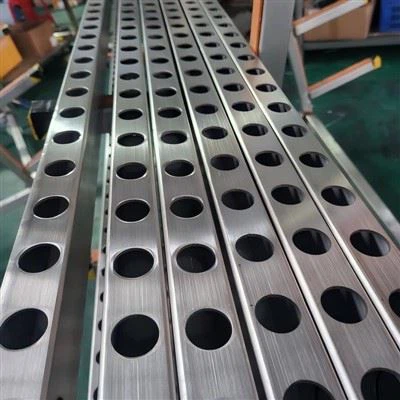
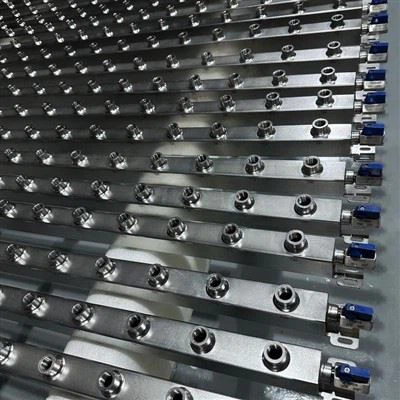
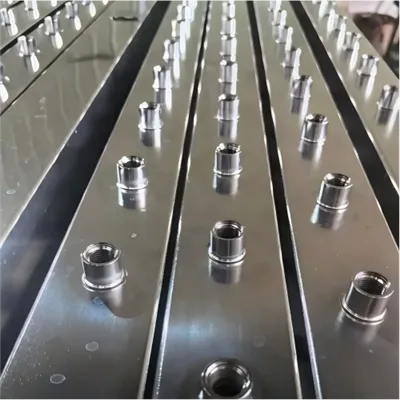
Straight lengths, U-bends, multi-pass serpentine coils, and integrated manifolds.
End Preparations:
Plain square cut, bevelled ends for field welding, threaded connections, or flanged fittings.
Dimensional Customization:
Non-standard fin heights, variable fin pitches along a single tube length, and specific wall thickness schedules.
Engineering Review:
Submit CAD drawings or thermal performance targets (heat load, fluid flow rates, temperature differentials) to evaluate constructability and material compatibility.
Certifications


FAQ
As one of the most professional finned condenser tube manufacturers and suppliers in China, we're featured by quality products and good service. Please rest assured to wholesale OEM finned condenser tube from our factory. Also, custom service is available.
