12 Questions Every Buyer Should Answer Before Ordering 316 Liquid Cooling Pipe
What a 316 Liquid Cooling Pipe Is
A 316 Liquid Cooling Pipe is a stainless steel tube carrying coolant through AI server racks and CDU loops, distinguished from conventional industrial tubing by its molybdenum-bearing 316L chemistry and controlled internal surface finish. The distinction matters because liquid cooling carries three cost traps - leakage, corrosion, and contamination - and each one traces back to a purchasing decision you either verified or skipped.
The questions below split into four decision zones: engineering, quality, delivery, and commercial. Answer all twelve before you commit volume.
If you are already comparing material grades, you can also review the 316 Liquid Cooling Pipe product specifications before sending an RFQ.

Engineering Zone: Questions 1–3
Does the supplier confirm your drawing against your coolant chemistry, or just against your dimensions?
Material SelectionA drawing tells the supplier where the bend goes. It does not tell them your coolant contains chloride ions or runs glycol at 45°C. 316L's molybdenum content resists pitting corrosion that 304 cannot, which is why we select grade against the coolant environment before selecting geometry. Ask whether the supplier requests your coolant spec sheet.
What internal surface roughness does the tube carry?
CleanlinessInternal finish drives particle accumulation and coolant cleanliness. Conventional industrial tubing typically ships well above the Ra ≤0.4 μm range. We achieve Ra ≤0.4 μm through polishing, pickling, and passivation. The number matters because a rougher wall sheds particles into your loop, and your CDU filter bears that load.
Which welding method controls your leak risk at the joint?
Leak ControlLeak prevention lives or dies at the weld. Orbital welding technology holds penetration consistency that manual welding cannot across a production run. We operate under ISO 3834 welding quality management with 100% leak inspection before shipment. Ask for the standard number, not the word "ISO 9001 certified."

For applications where coolant chemistry and geometry must be evaluated together, see the Glycol Compatible Stainless Liquid Cooling Pipe .
Quality Zone: Questions 4–6
Can the supplier prove batch-to-batch consistency with inspection data?
Batch ConsistencySamples prove capability once. Only process control proves it every time. Each raw material batch passes chemical composition inspection; dimensional and weld checks run through the line; every unit ships against a retained inspection record. When a client's fourth batch drifted 0.3 mm, the root cause was a supplier with no in-process dimensional gate. Ask to see an inspection record from a batch you did not order.
Who runs the final leak and pressure test, and can you see the report?
Testing100% pre-shipment leak testing only means something when it is witnessed and documented. Our multi-stage testing covers incoming material, dimensional measurement, welding inspection, surface verification, and leakage testing before release. Third-party verification is available through SGS, TÜV, or BV on request. A supplier who cannot produce a test report cannot support your internal approval process.
What is the defect rate and how is a rejected unit handled?
Corrective ActionAsk for the number in writing. Our process targets stable performance across prototype and mass-production orders, backed by full-process traceability from material verification to final shipment approval. Pair the defect rate with the return policy and the response window - a low rate with a slow remedy is a high rate with extra steps.
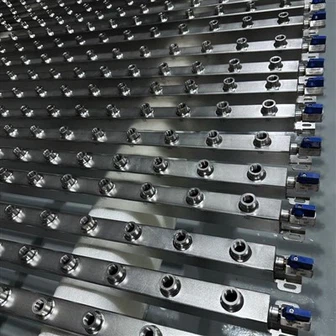
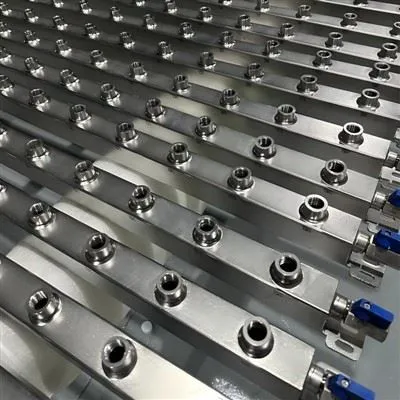
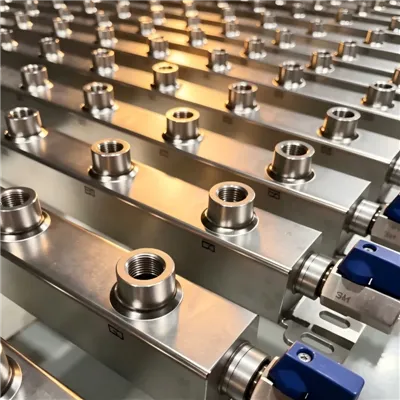
For projects using manifolds instead of straight pipe, review the Data Center Liquid Cooling Manifold Pipe specifications and inspection structure.
Delivery Zone: Questions 7–9
What is the confirmed lead time, and what does "urgent" actually shift?
Lead TimeStandard product lead time runs 7-15 working days. For time-critical projects, flexible production coordination delivers 30% faster on urgent orders. Get both numbers written into the PO. "Fast" without a number is not a delivery commitment.
Does the supplier hold inventory, and on which sizes?
InventoryInventory buffers decide whether your rack install waits on a shipment. We hold bonded inventory across common dimensions and integrate the full production chain - material inspection, tube forming, precision welding, surface treatment, CNC machining, inspection, and final assembly. Ask which sizes are stocked versus made to order.
How is the tube protected in transit for a precision application?
PackagingContamination arrives by truck, not by corrosion. After final cleaning and inspection, products are packed to prevent contamination and surface damage in transit, ready for direct system integration. A supplier who ships precision tubing in open bundles hands you a cleaning job you did not budget.
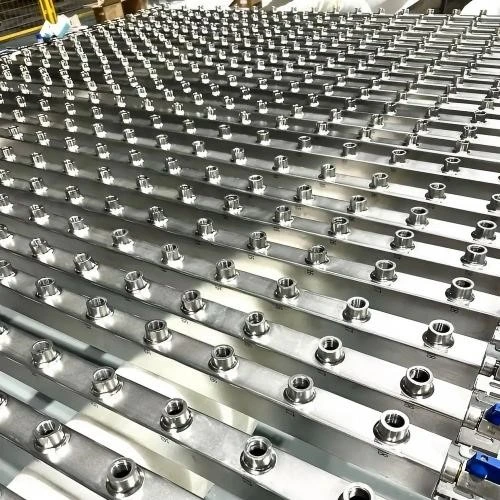
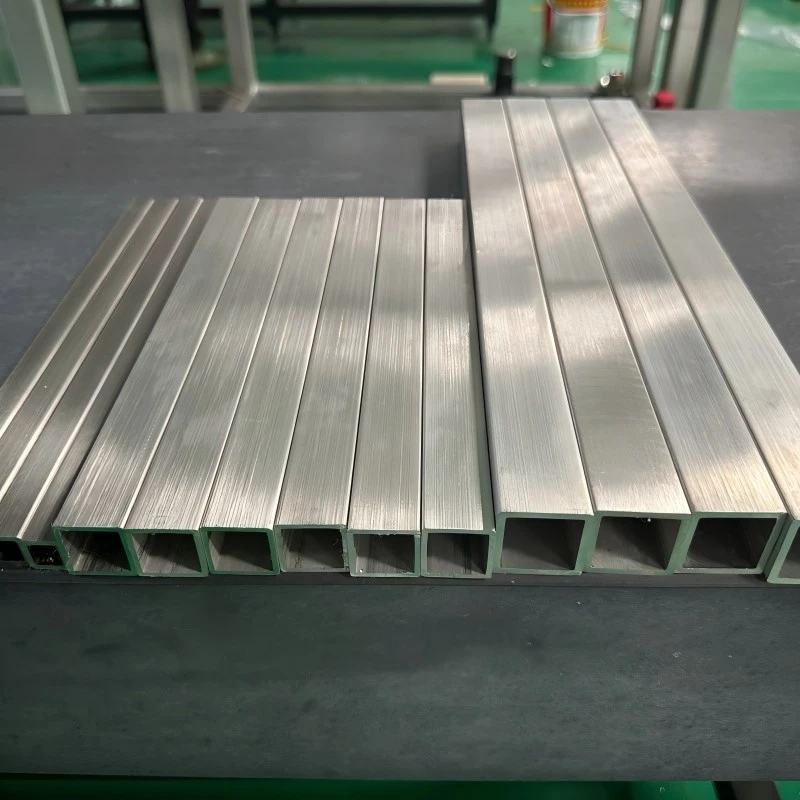
If your application uses larger square sections or data-center distribution lines, see the Stainless Steel Square Liquid Cooling Pipe for Data Centers .
Commercial Zone: Questions 10–12
What is the true cost across the project, not the unit price?
Total CostA client once chose a supplier 15%-20% below market. Dimension drift, rework, and extra inspection pushed total project cost above the higher-quoted plan. He said it plainly: "The cheapest supplier is not always the most cost-effective choice. We care more about total project cost." Lower the unit price, and watch where the hidden cost lands.
What is the MOQ, and how does the sample policy work?
SamplingConfirm the minimum order quantity against your actual first run, plus whether custom prototypes are supported for new designs. Sample availability before mass production lets you verify dimensions and performance before committing. Ask what a prototype costs and how long it takes.
What customization range does the supplier hold, and what is the warranty?
CustomizationConfirm the size envelope before you design around it: 10×10 mm to 80×80 mm square tubes, 0.5–3.0 mm wall thickness, and lengths up to 6000 mm, with bent tubes, manifolds, and assemblies supported. Pair the range with the warranty terms and the technical response window - 24-hour engineering response on drawings, material selection, and project requirements.
Specification Points to Confirm Before Volume Ordering
| Specification | Requirement / Available Range | Why Buyers Should Confirm It |
|---|---|---|
| Material | 316 / 316L stainless steel | Match material grade to coolant chemistry and operating environment. |
| Square Tube Cross-Section | 10 × 10 mm to 80 × 80 mm | Determines system fit and flow-path geometry. |
| Wall Thickness | 0.5–3.0 mm | Influences mechanical performance and installation requirements. |
| Length | Up to 6000 mm | Allows buyers to evaluate layout and number of joints. |
| Internal Surface Roughness | Ra ≤0.4 μm | Supports coolant cleanliness and controlled internal flow conditions. |
| Geometry | Custom bends, manifolds and assemblies | Important for space-constrained CDU and rack designs. |
| Lead Time | Standard 7–15 working days | Should be written into the PO rather than left as a verbal commitment. |
How to Run These 12 Questions Before You Order
Turn the list into a procurement filter instead of a checklist you skim.
- Send all twelve questions in one message and time the reply. A supplier who answers within 24 hours with specifics passes the responsiveness gate.
- Request one inspection record and one leak-test report from a batch you did not order - this tests process control, not sales talk.
- Ask for the lead time, urgent-shift percentage, and stocked sizes in writing before negotiating price.
- Purchase a sample or prototype first; verify outer diameter, wall thickness, weld, and internal finish against your own gauge.
- Score each reply against your project risk - a supplier that answers ten of twelve with numbers earns the volume order; one that answers with adjectives does not.
Get the Answers in Writing
Send us your drawing, coolant spec, and target volume. A manufacturer engineer replies within 24 hours with dimensional confirmation, lead time, and inspection documentation you can file for internal approval.
2. WhatsApp instant contact
3. Technical consultation booking - drawing review with an engineer
4. Sample request - verify before you commit volume
5. Resource download center - inspection report sample and MTR example
Current Q3 production slots are being allocated; sample orders ship within 7-10 days. Submit and you reach a real engineer, usually within minutes.
Frequently Asked Questions
Q1: What information should I send for a 316 liquid cooling pipe engineering drawing confirmation?Send the tube drawing with outer diameter, wall thickness, bend geometry, connection method, and length, plus your coolant type, operating temperature, and chloride exposure. We review dimensions and material selection together because 316L's molybdenum content determines corrosion performance in glycol and chloride environments. Engineering responds within 24 hours with a technical review before production. This single-message approach shortens the decision cycle and avoids the wrong-grade error that shows up only after installation.
Request an inspection record from a batch you did not order, then cross-check outer diameter, wall thickness, and weld quality against your own measurements. Our process runs chemical composition inspection at raw material, dimensional and weld checks in-process, and 100% leak testing pre-shipment, with full traceability from material verification to final shipment approval. For high-volume AI server rack programs ordering thousands of tubes, this record trail is what prevents assembly-line mismatch when batch four arrives.
Standard product lead time is 7-15 working days. Urgent projects receive 30% faster delivery through flexible production coordination. Custom bent tubes, manifolds, and assemblies add engineering review time, confirmed before the PO is signed. With 12,000 tons annual capacity and a full in-house production chain, we schedule both prototype runs and large-volume orders without queuing. Ask for the confirmed date in writing - it belongs in the purchase order, not in a sales email.
MOQ depends on tube dimensions and whether the order is standard or custom. Standard sizes ship at lower thresholds; prototype and small-batch trial production are supported for new liquid cooling designs so you can validate before committing to volume. Confirm your first-run quantity against the quoted MOQ during the quote stage. Sample orders are available before mass production, letting you verify dimensions and performance and reduce development risk before a full program launch.
Warranty terms are confirmed per order and cover manufacturing defects across the delivered batch. Technical support runs with a 24-hour engineering response window, drawing-based review before production, and inspection documentation to support your internal approval. Quality verification reports and product documentation are provided according to your requirements. For critical cooling applications, pairing the warranty with retained inspection records and third-party verification options gives your team the evidence needed for supplier qualification.
Yes. Beyond standard straight tubes, we manufacture customized bent tubes, manifolds, and integrated liquid cooling assemblies. Supported ranges span 10×10 mm to 80×80 mm square tubes, 0.5–3.0 mm wall thickness, and lengths up to 6000 mm, with custom tolerances available. Send the assembly drawing with space constraints and connection points; engineering reviews bend geometry and interface methods before quoting so the finished part integrates without field modification.
Related Liquid Cooling Products
316 Liquid Cooling Pipe
Precision 316/316L stainless steel pipe for AI data centers, CDU systems and industrial thermal management.
View Product →Data Center Liquid Cooling Manifold
Custom 304/316L manifold pipe for coolant distribution, server racks, CDU systems and energy storage.
View Product →Square Liquid Cooling Pipe
Stainless steel square liquid cooling pipe for data-center and high-density thermal management layouts.
View Product →Glycol Compatible Stainless Liquid Cooling Pipe
Stainless steel cooling pipe designed for glycol-based coolant applications and controlled internal surface finish.
View Product →304 Liquid Cooling Pipe
304/304L stainless steel liquid cooling pipe for applications where coolant chemistry and project requirements allow this material grade.
View Product →Liquid Cooling Hard Tube
Precision stainless steel hard tube for AI data centers, CDU systems and energy storage thermal management.
View Product →Before You Place the Purchase Order
Do not evaluate a 316 liquid cooling pipe only by unit price. Confirm the material, internal surface finish, welding method, batch consistency, inspection records, lead time, inventory, packaging, MOQ, customization range and warranty in writing.
Send your drawing, coolant specification and target volume to China Super Tech. The engineering team can review the requirements before production and provide dimensional confirmation, lead time and inspection documentation for your internal approval.