How To Install A 316 Liquid Cooling Manifold
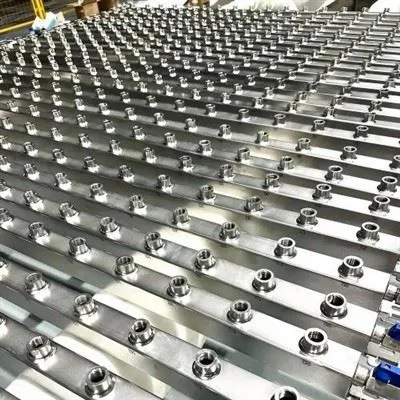
A 316 stainless steel liquid cooling manifold distributes coolant from the coolant distribution unit (CDU) to multiple server rack branches. Correct installation helps prevent leaks, connection stress, and commissioning delays. Follow these steps to check the component, align connections, complete assembly, and verify the system before operation.
 |
1. Check the Specifications Before InstallationBefore removing the manifold from its packaging, compare the delivered component with the approved engineering drawing. Incorrect dimensions or port positions can prevent the manifold from fitting the rack.
Resolve discrepancies before mounting. Never force a mismatched connection into position to save installation time. |
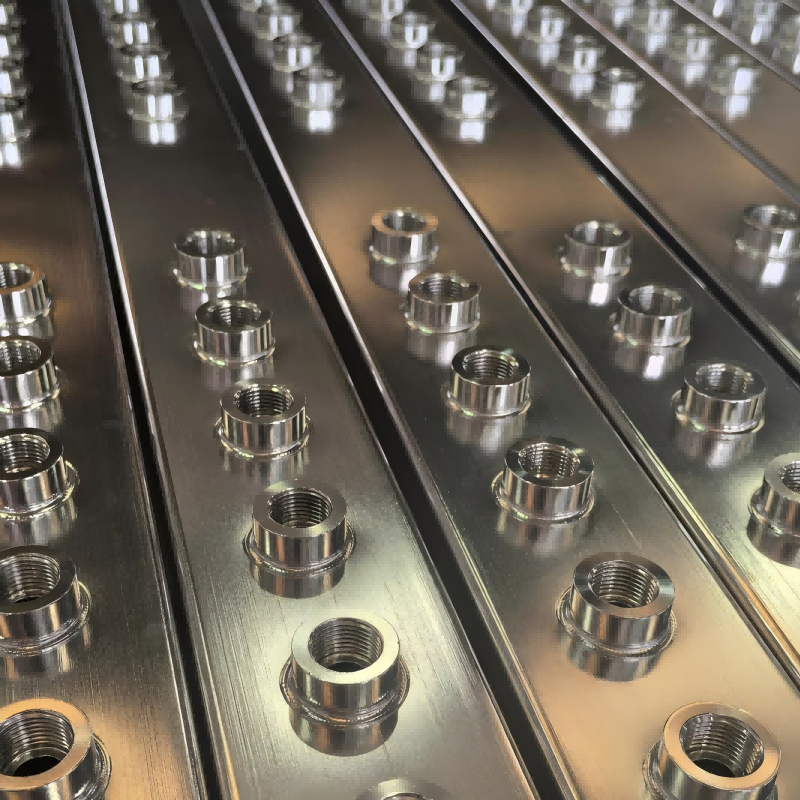
2. Inspect Welds and Internal CleanlinessWeld quality and internal cleanliness are important to liquid cooling system reliability. Defective joints may leak, while contaminants inside the manifold can enter the coolant loop.
Factory inspection does not replace the leak test required after the manifold has been connected to the site piping. |
 |
 |
3. Position and Align the ManifoldCorrect alignment reduces unnecessary stress on the manifold body, branch connections, and welded joints.
If a branch does not line up, check the dimensions and mounting position. Do not use bolts to pull misaligned components together or bend a welded manifold without engineering approval. |
4. Tighten Connections CorrectlyAfter alignment has been confirmed, complete the connections according to the approved installation procedure.
Important: Do not guess torque values. The correct value depends on the fitting, gasket, connection design, and project specification.
|
|
|
5. Flush, Pressure-Test, and Check for LeaksAfter assembly, verify the completed loop according to the project commissioning procedure.
Never exceed the allowable test pressure of any component in the test section. Follow the project's safety and commissioning requirements. |
Installation Checklist
- Material grade and documentation match the approved drawing.
- Dimensions and port orientation have been verified.
- Internal passages and connection surfaces are clean.
- Mounting position and branch alignment are correct.
- Fittings, gaskets, and sealing methods are appropriate.
- Fasteners have been tightened to the specified requirements.
- Unused ports are properly closed.
- Required flushing and leak testing are complete.
- Inspection and test records are ready for handover.
Frequently Asked Questions
1. What torque should I use for a 316 liquid cooling manifold?
Use the torque specified for the actual fitting, gasket, and connection design. If no value is provided, consult the fitting manufacturer or responsible engineer before assembly.
2. Does factory testing replace on-site leak testing?
No. Factory inspection checks the supplied component under specified conditions. On-site testing verifies the completed loop and the connections made during installation.
3. What if the manifold ports do not align with the rack connections?
Stop and check the drawing, dimensions, mounting position, and mating components. Do not force the parts together. Obtain engineering approval before making modifications.
4. Should I choose 316 or 316L stainless steel?
The choice depends on coolant chemistry, operating temperature, corrosion requirements, and the project specification. Confirm material compatibility with the system designer before ordering.
5. Can a custom manifold help in a space-constrained rack?
Yes. A manifold designed around the approved rack layout can accommodate specific branch spacing, port orientation, and installation clearances. Confirm the drawing and connection requirements before production.
Need a Liquid Cooling Manifold for Your Project?
Share your drawing, material grade, port layout, connection type, and operating conditions to help clarify the required configuration before production.
Review the product specifications and discuss your project requirements with China Super Tech Co., Ltd.
View Liquid Cooling Manifolds