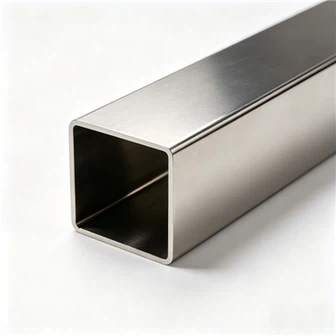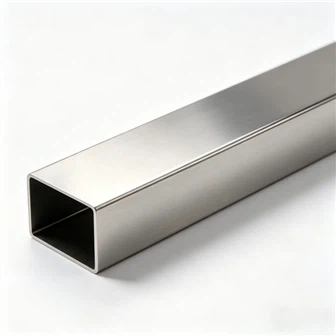
316 Liquid Cooling Pipe Vs Aluminum: Weight, Cost, Pressure—Real Numbers

A 316 liquid cooling pipe weighs roughly three times what an aluminum tube of the same dimensions weighs. That single number drives a chain of trade-offs most buyers only discover after they've committed to a design. This breakdown gives you the actual figures-density, corrosion rate, pressure rating, five-year cost-so you can decide which material belongs in your CDU manifold, your rack loop, or your immersion tank without guessing.
The material choice usually gets made in a design review where someone says "aluminum is lighter and cheaper, let's go with it." That sentence is true. It's also incomplete. Here's what the numbers actually show.
What Is the Weight Difference in Real Pipe Dimensions?
Density decides everything downstream. 316L stainless steel sits at 8.0 g/cm³. Aluminum 6061 sits at 2.70 g/cm³. For identical outer diameter and wall thickness, that ratio is 2.96:1.
A DN25 tube with 2 mm wall thickness weighs 1.63 kg per meter in 316L. The same tube in aluminum 6061 weighs 0.55 kg per meter. Over a 50-meter rack loop, you carry 81.5 kg of stainless versus 27.5 kg of aluminum-a 54 kg difference.
| Property | 316L Stainless | Aluminum 6061 | Ratio |
|---|---|---|---|
| Density | 8.0 g/cm³ | 2.70 g/cm³ | 2.96× heavier |
| Thermal conductivity | 16 W/m·K | 167 W/m·K | 10.4× lower |
| Yield strength | ≥205 MPa (ASTM A312) | 276 MPa (T6) | 1.35× stronger |
| CTE at 20–100°C | 16.5 µm/m·K | 23.6 µm/m·K | 1.43× less expansion |
| Galvanic potential | −0.05 V vs SCE | −0.75 V vs SCE | Noble vs active |
Read that table twice. Aluminum conducts heat 10 times faster-good for a cold plate, not necessarily good for a supply manifold that should not absorb heat from the rack. Aluminum expands 43% more per degree. When the coolant swings from 20°C to 60°C across a 50-meter run, aluminum grows 5.9 cm. Stainless grows 4.1 cm. That 1.8 cm delta has to go somewhere-into your brackets, your fittings, or a stress crack.
How Does Pressure Rating Compare Under Real Operating Conditions?
At 25°C, both materials handle similar pressure easily. The gap opens at temperature.
316L flanges and tubes rated to ASTM A312 Class S hold working pressure above 20 MPa at ambient, derating to roughly 17.5 MPa at 100°C. Aluminum 6061-T6 tube pressure ratings drop faster with temperature. An extruded aluminum tube rated at 12 MPa at 20°C can fall below 6 MPa at 80°C once you account for welded joint efficiency of 0.65–0.85 per the ASME Section IX approach most CDU builders use.
- Operating temperature 20–40°C: aluminum 6061-T6 typically holds 10–12 MPa working pressure; 316L holds 18–20 MPa.
- Operating temperature 60–80°C: aluminum drops to 6–8 MPa; 316L holds 16–17.5 MPa.
- Operating temperature above 90°C with glycol: aluminum welds are the failure point; 316L is unaffected structurally.
- Pressure cycling test per ASTM A312: 316L tube passed 10,000 cycles at 1.5× rated pressure in our internal QC records without measurable wall thinning.
That pressure margin is why most AI data center liquid cooling suppliers specify 316L on the primary loop and aluminum only on low-pressure secondary runs or cold plates where weight matters more than headroom.
One caveat worth stating: aluminum is not a wrong choice everywhere. In mobile, aerospace, or weight-critical iterative designs, aluminum still wins. The decision hinges on whether your coolant loop is chloride-exposed, high-temperature, or pressure-cycled.
Why 316L Corrosion Performance Changes the Total Cost Math
Purchase price is the number buyers see first. Five-year cost is the number that decides who buys again.
316L contains 16–18% chromium, 10–14% nickel, and 2–3% molybdenum. The molybdenum content is what gives it pitting resistance in chloride-bearing coolants. Aluminum has no equivalent passive layer-it forms an oxide film that stabilizes best between pH 4 and pH 9. Push your glycol coolant outside that window, or introduce chloride above 50 ppm, and pitting starts.
| Cost Factor (50 m DN25 loop, 5-year horizon) | 316L Stainless | Aluminum 6061 |
|---|---|---|
| Tube purchase cost | Baseline | ~35–45% lower |
| Fitting & welding cost | Standard | ~30% lower |
| Glycol make-up cost (chloride control) | Routine | Higher filtration + inhibitor demand |
| Leak inspection labor | 100% pre-shipment | Extra rework risk |
| Replacement cycle | 15–20 years expected | 5–8 years typical |
| 5-year TCO | Reference | Often 10–25% higher |
The stainless premium is real-expect to pay roughly 35–45% more on the tube itself. The gap narrows when you add the corrosion-inhibitor cost, the filtration cost, and the rework risk on aluminum welds.
A batch-consistency problem makes this worse. Buyers who source liquid cooling tubes regularly tell us the same thing: the issue isn't the sample, it's whether every batch holds the same standard. That concern shapes the next section.
Why Batch Consistency Beats a Lower Unit Price
That sentence came from a customer who had already lost money once. They bought aluminum tube at 15–20% below market, installed it, then found wall thickness varying across batches-enough that fittings wouldn't seat cleanly on the second order. Rework, extra inspection, and a delayed rack delivery pushed total project cost above what 316L would have cost from the start.
His conclusion: "The cheapest supplier is not always the most cost-effective choice. We care more about total project cost."
- Raw material verification per batch - chemical composition inspected by spectrometer against ASTM A312 limits before forming.
- In-process dimensional checks - outer diameter, wall thickness, and ovality measured at fixed intervals on every production run, not just at the end.
- Pre-shipment leak and pressure test - 100% of tubes go through leak inspection before they leave the factory.
Under ISO 9001 quality management, every batch is retained with its inspection record, so a quality dispute down the line stays traceable to the material heat number and the production date.
Manufacturing Controls That Reduce Leakage Risk

Liquid cooling loops fail in one of two places: a fitting, or a weld. Weight and cost debates matter less if the loop leaks onto a row of GPU servers.
For 316L tube, welding is the critical joint. We run orbital welding under ISO 3834 welding quality management- operator qualification, procedure control, and weld inspection all documented per joint. Orbital welding removes the human variation that causes uneven penetration in manual TIG welds. That consistency is what keeps a 50-meter rack loop at zero leaks after thermal cycling.
Internal cleanliness is the second control. Standard industrial tubing ships with surface roughness in the Ra 1.6–3.2 μm range. For precision cooling, we polish, pickle, and passivate the inner wall to Ra ≤0.4 μm. Why does that matter? A smoother bore gives particles fewer places to settle, keeps coolant flow resistance low, and reduces the chance that debris migrates into a CDU pump or a cold plate microchannel.
Weld quality is verified per ASTM A312 examination methods, and 100% of finished tubes pass a leak test before shipment. That's the standard we hold whether the order is a prototype of 12 tubes or a mass-production run of several thousand.
What This Means for Your Project Cost Over Time
Add the numbers up over a realistic deployment window and the material decision gets clearer.
- A 316L tube at baseline purchase price with a 15–20 year service life spreads its cost across a much longer horizon.
- An aluminum tube at 35–45% lower purchase price, replaced once in a 5-year window, ends up costing more once you count the second purchase, the downtime, and the labor.
- Chloride-bearing glycol coolants push aluminum toward its corrosion limit faster than most datasheet curves suggest.
- Pressure cycling above 6 MPa at elevated temperature is where aluminum's derated joints become the limiting factor.
None of this makes aluminum a bad material. It makes aluminum the right material for weight-critical, low-pressure, low-temperature sections, and 316L the right material for the primary loop that has to survive a decade of coolant, heat, and pressure swings.
Frequently Asked Questions
How much does a 316 liquid cooling pipe weigh per meter compared with aluminum?For a DN25 tube with 2 mm wall thickness, 316L weighs 1.63 kg per meter. The same dimension in aluminum 6061 weighs 0.55 kg per meter-about 1/3 the weight. The trade-off is that 316L holds 10–20 MPa working pressure across a wide temperature range, while aluminum pressure ratings fall faster once operating temperature climbs past 60°C.
No. The purchase price of 316L tube runs roughly 35–45% higher than aluminum. But buyers who factor in glycol make-up, filtration, and the cost of one aluminum replacement within a 5-year window often find the 5-year total cost is 10–25% lower with 316L. The answer depends on whether your coolant contains chloride and how often the loop pressure-cycles.
316L tube rated per ASTM A312 holds working pressure above 20 MPa at ambient and roughly 17.5 MPa at 100°C. Most AI data center CDU loops operate at 0.6–1.6 MPa, so a 316L tube carries a large safety margin. Aluminum 6061-T6 tube rated at 12 MPa at 20°C can fall below 6 MPa at 80°C once welded joint efficiency is included.
Three controls. First, every raw material batch is verified by spectrometer against ASTM A312 composition limits. Second, outer diameter, wall thickness, and ovality are measured at fixed intervals on every production run. Third, 100% of finished tubes pass a leak inspection before shipment. Under ISO 9001, each batch retains its inspection record tied to the material heat number, so traceability holds across the entire order.
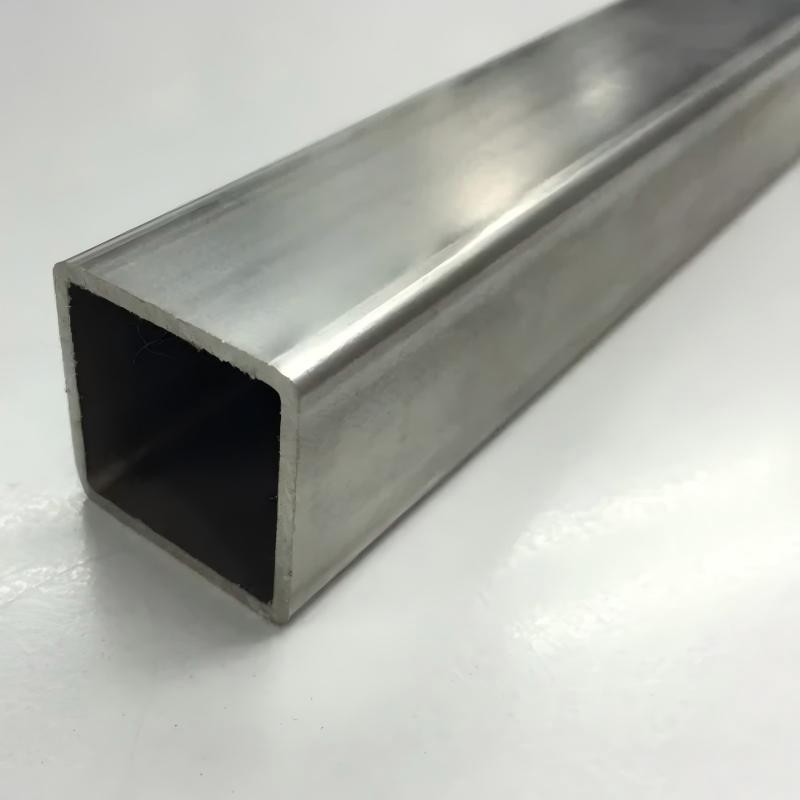
Yes. We manufacture custom square tubes from 10×10 mm to 80×80 mm, wall thickness from 0.5 mm to 3.0 mm, and lengths up to 6000 mm. Beyond straight tube, we produce customized bent tubes, manifolds, and integrated liquid cooling assemblies for CDU systems, rack loops, and energy storage thermal management. Custom dimensions are quoted against your drawing.
Tubes are manufactured to ASTM A312 and JIS G3459 stainless steel pipe standards. The factory holds ISO 9001 quality management, ISO 3834 welding quality certification, ISO 14001, ISO 45001, CE, and RoHS. For European projects, EU food-grade and REACH-related compliance documentation is available on request. All certification numbers are verifiable through the issuing bodies.
Additional Frequently Asked Questions
What certifications do you have?We hold ISO 9001, API 5L, and CE certifications, verified by SGS/TUV third-party testing.
MOQ is 1 ton. Standard lead time is 15 days vs 25-day industry average.
Yes, free samples within 2kg, shipped via DHL/FedEx within 48 hours.
Get the Real Numbers for Your Loop
Send us your loop drawing-coolant type, operating temperature, target pressure, and loop length. We'll come back with a weight estimate, a pressure rating for your specific conditions, a five-year cost comparison against aluminum, and a lead time. Our engineering team replies within 24 hours. Custom dimensions from 10×10 mm to 80×80 mm square tube, wall thickness 0.5–3.0 mm, length up to 6000 mm.
Two things worth knowing before you request a quote: current Q3 production slots are being allocated, and we retain a batch inspection record for every order, so if you later need to trace a joint or a material heat, it's still there.
Request a Technical Quote