



Liquid Immersion Cooling Data Center
A liquid immersion cooling data center runs hundreds of server nodes submerged in dielectric coolant, removing heat at the source. The coolant circulates through a closed-loop system where stainless steel tubing carries it between the tank, CDU, and heat exchanger. China Super Tech Co., Ltd....
Product Introduction

A liquid immersion cooling data center runs hundreds of server nodes submerged in dielectric coolant, removing heat at the source. The coolant circulates through a closed-loop system where stainless steel tubing carries it between the tank, CDU, and heat exchanger. China Super Tech Co., Ltd. manufactures the 304 and 316L stainless steel tubes and manifolds that form the circulation backbone of these systems - with internal surface roughness down to Ra ≤0.4 μm and 100% leak inspection before shipment.
Why a Leak Costs More Than the Server Itself
A single pinhole leak in a liquid immersion cooling data center does not just wet one rack. Coolant escapes into the tank, contaminates the dielectric fluid, forces a full system drain, and stops compute capacity for days. In a 1 MW facility, each hour of downtime carries a measurable price tag. Buyers who sourced standard industrial tubing for immersion loops learned this the hard way - the tube met generic pipe specs, but the weld zone and internal surface were never engineered for continuous coolant contact at 40-60°C operating temperatures.
- Weld defects from uncontrolled manual processes account for the majority of field failures in immersion cooling loops
- Internal surface roughness above Ra 1.0 μm accelerates particle accumulation, which shortens coolant service life and increases pump wear
- Batch-to-batch dimensional drift forces rework during manifold assembly, delaying entire project timelines
The manufacturers who solve these three risks are the ones whose tubing is designed for the immersion environment - not adapted from plumbing catalogs.
Material Grade Decisions: 304 vs 316L in Immersion Coolant
The coolant in a liquid immersion cooling data center is not pure water. Single-phase immersion fluids are typically synthetic hydrocarbons or fluorinated compounds; two-phase fluids boil and condense inside the tank. Glycol-water blends appear in the secondary loop. Each chemistry interacts differently with stainless steel, which is why China Super Tech's engineers ask for your coolant specification before recommending a grade:
- 316L - contains molybdenum (2-3%), which stabilizes the passive film against chloride attack. Recommended when the secondary loop uses glycol-water with inhibited additives, or when the facility sits in coastal environments where airborne chlorides accelerate pitting. The material cost premium over 304 is roughly 15-20%, but in a system designed for 10+ years of service, replacing a corroded manifold costs 10-50x that premium.
- 304 - adequate for deionized water loops and closed systems where coolant chemistry is tightly controlled. It is the workhorse grade for CDU internal piping where the fluid never sees chlorides.
- Material certification - each batch ships with mill certificates and chemical composition reports per ASTM A312 or JIS G3459, verified by incoming spectrometer testing. Under ISO 9001:2015, every batch is retained for 90 days, so quality disputes stay traceable.
The metallurgy matters less than the verification. A 316L label without a spectrometer report is just a label.
The Manufacturing Controls That Prevent Field Failures
China Super Tech's 11 years of stainless steel tube manufacturing have produced a process sequence specifically for liquid cooling duty. The factory in China operates as an integrated facility - raw material, forming, welding, surface treatment, machining, inspection, and assembly all happen under one roof. That single factor removes the coordination risk that plagues multi-vendor supply chains, where the tube mill blames the fabricator and the fabricator blames the finisher.

- Material verification - every raw batch passes spectrometer testing and material certification review; 304/316L grades are selected against your coolant environment
- Precision tube forming - dimensions held to specification across the full production run, with geometry consistency verified through in-process gauging
- Controlled welding - orbital welding technology and ISO 3834-certified procedures ensure uniform weld penetration, eliminating the human variability of manual TIG
- Internal surface treatment - polishing, pickling, and passivation achieve internal roughness down to Ra ≤0.4 μm, creating a smooth flow path that resists particle adhesion
- Customized assembly - bends, manifolds, and integrated assemblies are manufactured for space-constrained layouts, reducing the number of field joints
- Multi-stage testing - incoming inspection, dimensional measurement, weld inspection, surface verification, and 100% leak testing before shipment
- Clean packaging - products are sealed after final cleaning to prevent contamination during transit, so they arrive ready for direct installation
The 12,000-ton annual capacity means three parallel production runs proceed without queueing. Urgent orders ship in days, not months.
The Real Cost Comparison: Cheap Tubing vs. Total Project Cost
A procurement manager in Singapore compared quotes for 316L liquid cooling manifolds and found a 58% spread between the lowest and highest bidder ($5 vs. $12 per unit equivalent). The lowest bidder's tubing arrived with dimensional drift across batches - some pieces would not fit the CDU ports, forcing field rework that consumed the apparent savings. As one customer put it: "The cheapest supplier is not always the most cost-effective choice. We care more about total project cost."
The cost of a leak in a liquid immersion cooling data center is not the replacement tube. It is the drained coolant, the idle servers, the missed deployment deadline, and the engineering hours spent finding the fault. A manifold that fails during burn-in testing delays an entire facility's commissioning. Suppliers without in-house testing may miss batch defects that surface only after installation.
| Cost Factor | Standard Industrial Tubing | Liquid Cooling-Grade Tubing |
| Unit price | Lower by 15-20% | Higher, reflecting dedicated process control |
| Internal surface finish | Ra >1.0 μm - particles accumulate in service | Ra ≤0.4 μm - smooth flow path, stable coolant over time |
| Weld quality control | Manual processes, operator-dependent | ISO 3834-certified, orbital welding for consistent penetration |
| Inspection before shipment | Spot checks or none | 100% leak inspection plus dimensional verification |
| Field rework risk | Dimensional drift across batches | Batch consistency maintained through process control |
| Total project cost | Lower purchase price, higher installation and repair cost | Higher purchase price, materially lower risk of failure |
Recommended Winner - liquid cooling-grade tubing that matches the coolant chemistry and is verified batch by batch. In immersion cooling infrastructure, the tubing is a small fraction of total system cost but a single point of failure for the entire facility.
Applications Across the Data Center Cooling Map
Liquid immersion cooling data center architectures vary, but the stainless steel tubing requirements cluster into three deployment patterns. China Super Tech's manufacturing program covers all of them:
- Single-phase immersion cooling - servers submerged in dielectric fluid; the circulating loop requires clean internal surfaces to keep the fluid free of particulates; 316L is commonly specified for the secondary loop where glycol-water blends are used
- Two-phase immersion cooling - fluid boils and condenses; the sealed loop demands weld integrity and leak-tight connections; orbital welding and 100% leak testing are non-negotiable
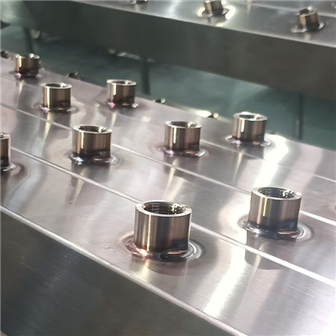
- CDU and heat rejection systems - the coolant distribution unit routes fluid between the tank and the dry cooler or cooling tower; manifolds and header assemblies require custom dimensions to fit compact CDU footprints
Beyond data centers, the same tubing serves energy storage systems and industrial thermal management, where battery packs and power electronics generate heat that must be removed continuously. The manufacturing controls are identical; only the coolant chemistry and operating temperature shift.

The Risk of Unverified Quality in Immersion Systems
A liquid immersion cooling data center operates for years without opening the loop. Unlike air-cooled systems where a failing fan is replaced in minutes, a coolant loop issue means draining the fluid, breaking the seal, and disturbing hundreds of thousands of dollars of compute hardware. The buyer's deepest concern is batch consistency - not the sample quality, but whether every batch maintains the same standard. China Super Tech's response is structural: spectrometer verification on every raw batch, dimensional checks throughout production, weld quality management under ISO 3834, and 100% pressure and leak testing before shipment.
That process stack is why the factory's tubes have supported 600+ customer projects across 20+ countries since 2013. It is also why the manufacturer can back its products with traceable documentation - material certificates, test reports, RoHS and REACH compliance, and CE marking for the European market.
Questions Buyers Ask Before Sourcing Immersion Cooling Tubing
Q1: What is the typical lead time for custom liquid cooling manifolds?
Standard straight tubes ship within 2-3 weeks depending on volume. Customized manifolds and assemblies require 4-5 weeks from drawing approval, including prototyping. The 12,000-ton annual production capacity allows expedited scheduling for urgent projects. Final timelines are quoted against your specific drawing set.
Q2: How does internal surface roughness affect coolant performance in an immersion system?
Rough internal surfaces create sites where particles accumulate over time. As buildup grows, coolant flow becomes turbulent, heat transfer efficiency drops, and the fluid may need premature replacement. Ra ≤0.4 μm surface finish keeps the flow path smooth, reducing particle adhesion and maintaining stable thermal performance over the system's operating life.
Q3: Do you provide material certifications and test reports with every shipment?
Every shipment includes mill certificates for the raw material, chemical composition reports per the applicable standard (ASTM A312 or JIS G3459), and the manufacturer's inspection reports covering dimensional measurements and leak test results. RoHS, REACH, and CE documentation are available on request per your market requirements.
Q4: What welding methods are used for liquid cooling components?
The factory uses controlled processes including orbital welding technology, certified under ISO 3834. Orbital welding provides automated, repeatable weld penetration that minimizes human variability. For customized assemblies, the welding procedure is qualified against your application's pressure and leak requirements before production.
Q5: Can you manufacture square tubes for immersion tank manifolds?
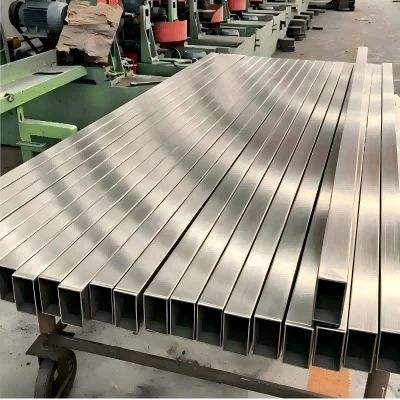
Square tubes are available from 10×10 mm up to 80×80 mm, with wall thickness from 0.5 to 3.0 mm and lengths up to 6,000 mm. Custom bends and manifold assemblies are also manufactured in-house. Dimensional tolerances are controlled to support precise port alignment during system integration.
Q6: What inspection is performed before shipment?
Every product undergoes multi-stage inspection: incoming material verification, in-process dimensional measurement, welding quality checks, internal surface verification, and 100% leak testing. The leak test methods include pressure testing and helium leak detection, depending on your specification. Final packaging is sealed after cleaning to prevent contamination during transit.
A Small Leak Creates a Very Expensive Failure
The engineering director of a high-performance computing facility summarized the stakes: "A small leakage problem in liquid cooling can create a very expensive failure." Chinese Super Tech's manufacturing system is built around that single truth - from spectrometer-verified raw material to orbital welding under ISO 3834, from Ra ≤0.4 μm internal surfaces to 100% leak testing before shipment.
The manufacturer supplies 304 and 316L stainless steel tubes, manifolds, and custom assemblies to 20+ countries, backed by 11 years of experience and ISO 9001, ISO 14001, ISO 45001, ISO 3834, and CE certifications. Presenting your coolant specification and port dimensions to the engineering team is all it takes to receive a leak-tight solution matched to your liquid immersion cooling data center architecture.
Request a Quote - an engineer responds within 24 hours with material recommendations and delivery timeline.
Hot Tags: liquid immersion cooling data center, China liquid immersion cooling data center manufacturers, suppliers, factory, aluminum liquid cooling pipe, evaporator cooling pipe, fluid cooling pipeline, high thermal conductivity pipe, optimized flow cooling pipe, pickled smooth stainless tube
You Might Also Like



Send Inquiry
