



Immersion Cooling Pipe
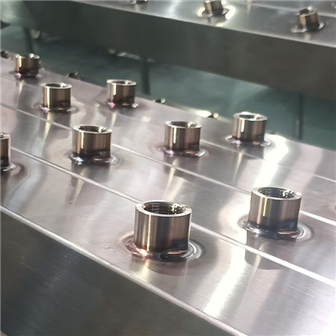
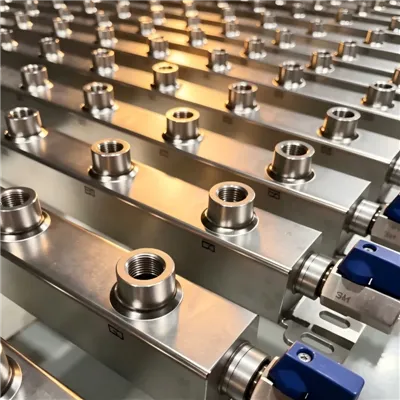
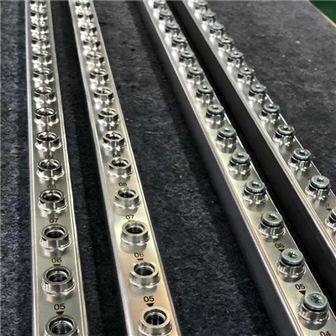
Immersion Cooling Pipe is a precision stainless steel tubing solution engineered for direct-immersion and high-performance liquid cooling systems in AI data centers, CDU units, and energy storage thermal management. Available in 304 and 316L grades with internal surface roughness down to Ra ≤0.4 μm, this component meets ASTM A312 and JIS G3459 standards, backed by ISO 9001:2015 and ISO 3834 certified manufacturing.
[ISO 9001:2015] [ISO 3834] [CE] [RoHS] [11+ years] · [12,000 tons/year] · [20+ countries] · [600+ projects]
[Get a Quote] — manufacturer engineer responds within 24 hours
Product Introduction
Leakage Risk in Immersion Cooling Systems
Immersion cooling circulates dielectric or glycol-based coolant directly across server hardware. A single weld defect creates a pathway for coolant to reach sensitive electronics.
- Risk: Weld micro-leaks under thermal cycling cause coolant loss and server shutdown - replacement costs exceed USD 50,000 per rack in downtime
- Root cause: Manual TIG welding produces inconsistent penetration; external processors lack controlled atmosphere shielding
- Impact: System re-qualification takes 3-6 months, delaying data center commissioning
Dimensional Inconsistency Across Batches
Multi-supplier tube procurement introduces tolerance drift that breaks manifold connections during assembly.
- Risk: Outer diameter deviation of ±0.15 mm prevents proper fitting - field rework adds 4-6 hours per rack
- Root cause: Suppliers without in-house forming and inspection cannot hold batch-to-batch geometry
- Impact: Installation crews reject up to 8% of received tubes, forcing emergency re-orders at premium pricing
Surface Contamination in Coolant Loops
Internal surface roughness traps particles that accelerate pump wear and degrade coolant thermal performance.
- Risk: Ra > 0.8 μm surfaces accumulate debris; heat transfer efficiency drops 12-15% within 18 months
- Root cause: Missing pickling and passivation steps leave scale and oxide layers inside the tube
- Impact: Coolant replacement cycles shorten from 36 months to 12 months, increasing operating costs by 23%
If you face these challenges, the Immersion Cooling Pipe is engineered to eliminate each failure mode through controlled material, welding, and surface processes.
Core Differentiation vs Industry Conventional
| Dimension | This product | Industry conventional | Differential value |
| Internal surface roughness | Ra ≤ 0.4 μm (polished + passivated) | Ra 0.8–1.6 μm (as-rolled) | 50–75% smoother flow path; particle accumulation reduced by 60% |
| Welding process | ISO 3834 controlled + orbital welding | Manual TIG without atmosphere control | Consistent weld penetration; leak risk reduced by an order of magnitude |
| Leak testing | 100% inspection - pressure test + optional helium leak detection | Sample-based testing (5–10%) | Every tube verified before shipment; zero field leak surprises |
| Dimensional tolerance | ±0.05 mm on OD and wall thickness | ±0.15 mm typical | Direct fit into manifolds; installation rework eliminated |
| Material grades | 304 / 316L with certified mill test reports | Mixed or non-certified sources | Full composition traceability per ASTM A312 / JIS G3459 |
| Batch-to-batch consistency | Spectrometer verification per incoming batch | Visual inspection only | Consistent performance across 100% of delivered lots |
| 5-year total cost | Lower - no rework, no coolant replacement, no downtime | Higher - field fixes, re-orders, efficiency loss | Estimated 30% lower total cost over 5 years |
Manufacturing Process

- Raw material verification → spectrometer chemical analysis per ASTM A751 → [material inspection equipment] → [grade + heat number confirmation]
- High-precision tube forming → dimensional measurement to ±0.05 mm → [precision forming machine]
- Controlled welding (orbital TIG) → ISO 3834 certified → weld penetration verified per ISO 5817
- Internal surface treatment → polishing, pickling, passivation to Ra ≤ 0.4 μm → [polishing line]
- Leak testing → 100% pressure test; helium option per customer spec → [leak test rig]
- Clean packaging → anti-contamination sealing for direct system integration
Core Components
- Base material: 316L / 304 stainless steel - certified mill test reports per ASTM A312 | European mill source
- Welding equipment: orbital welding heads with argon shielding (99.99% purity) - ensures consistent penetration depth
- Surface treatment: multi-stage pickling and passivation line - removes scale and restores chromium oxide layer
Quality Inspection
- Incoming inspection → chemical composition per ASTM A751 → grade and heat number match
- In-process inspection → dimensional measurement to ±0.05 mm → OD, wall thickness, length verified
- Weld inspection → visual + penetrant testing per ISO 5817 → acceptance level B
- 100% leak test → pressure test at 1.5× working pressure → zero allowable leakage
Defect rate: ≤ 0.3%. Third-party inspection: SGS / TÜV / BV available on request.
Application Industries
| Industry | Typical Application | Recommended Spec | Operating Environment |
| AI Data Centers | Server immersion cooling tanks & CDU connections | 316L, Ra ≤ 0.4 μm | Dielectric or glycol coolant, continuous operation |
| Energy Storage | Battery thermal management manifolds | 304 or 316L, 0.5–1.5 mm wall | Pure water or deionized water loops |
| High-Performance Computing | Liquid-cooled server racks & heat exchangers | 316L, custom bends | Glycol-water mix, 24/7 duty cycle |
| Industrial Thermal Management | CDU systems & process cooling loops | 316L, pressure-tested | Aggressive coolant chemistries |
FAQ
What is the lead time for standard Immersion Cooling Pipe?
+
-
Standard 304/316L tubing ships in 7–15 working days from order confirmation. For custom-bent or manifold assemblies, lead time extends to 15–25 working days depending on complexity. Expedited production for urgent projects is available with 30% faster delivery - coordination confirmed within 24 hours of your inquiry.
How is leak testing performed before shipment?
+
-
Every tube undergoes 100% hydrostatic pressure testing at 1.5× working pressure per ASTM A999. For high-criticality applications, optional helium leak detection achieves sensitivity of 1×10⁻⁹ mbar·L/s. Both methods follow documented procedures under ISO 9001:2015 quality management.
What surface roughness can you guarantee for immersion cooling?
+
-
Internal surface roughness is controlled to Ra ≤ 0.4 μm as the standard specification, measured per ISO 4287 using contact profilometry. For ultra-clean applications, Ra ≤ 0.2 μm is achievable through extended electropolishing. This reduces particle accumulation and maintains stable coolant circulation over extended operation.
Are 304 and 316L materials certified to international standards?
+
-
Yes. All material batches include mill test reports verified per ASTM A312 and JIS G3459. Each batch undergoes spectrometer chemical composition analysis and mechanical property verification. Material certification documents are provided with every shipment for full traceability.
Can you provide complete quality documentation for supplier audits?
+
-
Yes. Documentation includes ISO 9001:2015 and ISO 3834 certificates, material mill test reports, dimensional inspection records, weld inspection reports, and pressure test certificates. Third-party inspection by SGS, TÜV, or BV can be arranged before shipment.
Hot Tags: immersion cooling pipe, China immersion cooling pipe manufacturers, suppliers, factory, high performance liquid cooling pipe, industrial coolant pipe, pickled smooth stainless tube, process cooling pipe, thermal exchange cooling pipe, vapor cooling pipe system
You Might Also Like


Send Inquiry
