



Immersion Cooling System
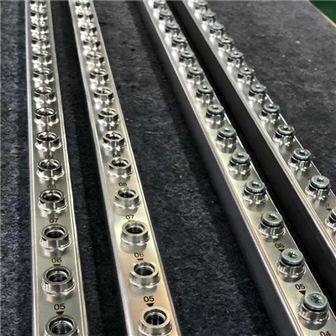
Immersion cooling system is a thermal management architecture in which IT hardware——servers, power supplies, memory——is fully submerged in a dielectric coolant, transferring heat directly from components to circulating fluid instead of relying on air movement. For AI data centers, high-density GPU clusters, and energy storage cabinets, this design eliminates the cooling capacity ceiling that air-based systems hit at roughly 20–30 kW per rack. China Super Tech Co., Ltd. supplies the stainless steel tubing, manifolds, and welded assemblies that carry coolant into and out of these immersion tanks, built to 316L material specifications under ASTM A312 with internal surface roughness of Ra ≤0.4 μm.
[ISO9001] [ISO14001] [ISO45001] [ISO3834] [CE] [RoHS] | 11+ years stainless steel manufacturing | 20+ export countries | 12,000 T annual capacity | 600+ customer projects
[Get a Quote] — engineering reply within 24 hours
Product Introduction
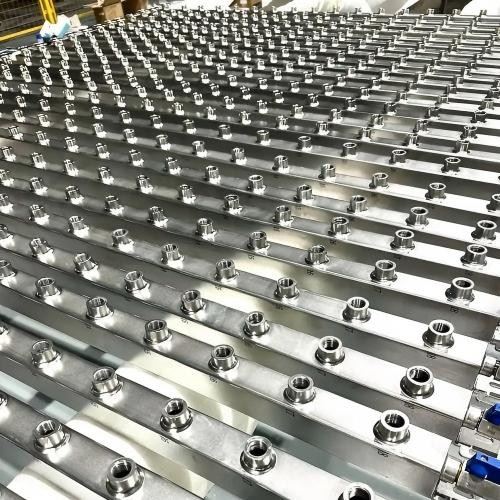
Immersion cooling system is a thermal management architecture in which IT hardware--servers, power supplies, memory--is fully submerged in a dielectric coolant, transferring heat directly from components to circulating fluid instead of relying on air movement. For AI data centers, high-density GPU clusters, and energy storage cabinets, this design eliminates the cooling capacity ceiling that air-based systems hit at roughly 20–30 kW per rack. China Super Tech Co., Ltd. supplies the stainless steel tubing, manifolds, and welded assemblies that carry coolant into and out of these immersion tanks, built to 316L material specifications under ASTM A312 with internal surface roughness of Ra ≤0.4 μm.
[ISO9001] [ISO14001] [ISO45001] [ISO3834] [CE] [RoHS] | 11+ years stainless steel manufacturing | 20+ export countries | 12,000 T annual capacity | 600+ customer projects
[Get a Quote] - engineering reply within 24 hours
Why Immersion Cooling Demands a Different Tube Standard
Immersion cooling moves more heat per liter of coolant than any air-assisted loop--and that concentration penalizes weak points mercilessly. Engineers evaluating immersion cooling system components face five recurring failure patterns:
- Leakage at welded joints after thermal cycling--immersed hardware creates heat spikes that expand and contract tubing continuously, exposing micro-porosity in welds that static pressure tests miss.
- Particle contamination from rough internal surfaces--loose scale or burrs circulate through the dielectric fluid, which in single-phase immersion systems recirculates for 3–5 years without draining.
- Galvanic corrosion between mismatched metals--316L is specified against chloride attack, but some suppliers substitute 304 grade quietly, and coolant chemistry accelerates the difference.
- Dimensional drift between batches--manifold ports that vary by ±0.5 mm force installers to rework connections on-site, a cost most project budgets do not anticipate.
- Coolant compatibility failures--the dielectric fluid, whether synthetic ester or PAO-based, degrades faster when in contact with poorly passivated surfaces, raising total fluid replacement frequency.
A small leakage in an immersion cooling tank is not a repair event. It is a drain-and-refill event involving 300–800 liters of dielectric coolant at roughly $15–25 per liter, plus the cost of server downtime while the loop is opened.
The Cost of Specification Drift in Immersion Cooling Systems
The engineering team at a German high-performance computing integrator learned this when their first immersion pilot loop spec'd 316L tubes at 1.5 mm wall thickness. The winning bidder delivered the first batch on spec--then the second batch arrived with wall thickness measuring 1.38–1.42 mm, still within ASTM A312's general tolerance. The result:
- Fitting engagement depth varied across 34 connections, requiring re-termination of 12 joints.
- The pilot commissioning slipped 11 days while replacement lengths were expedited.
- The project team lost confidence in their entire qualification protocol, not just the supplier.
The trigger was not a dramatic failure. It was a slow drift in dimensional control across batches--exactly the risk mode that hidden production data cannot reveal until installation.
| Risk Point | Industry Conventional Practice | China Super Tech Control | Differential Value |
| Internal surface cleanliness | Ra 0.8–1.6 μm, pickled only | Ra ≤0.4 μm via polishing + pickling + passivation | 50–75% lower particle shedding into circulating coolant |
| Welding consistency | Manual TIG, operator-dependent | Orbital welding under ISO 3834 control | Uniform penetration, fewer thermal-cycle-induced micro-pores |
| Batch dimensional stability | Spot-check per lot | 100% dimensional inspection per ASTM A312 tolerances | Predictable fit across batches; no mid-order re-tooling |
| Leak verification | Water pressure test at 1.5× working pressure | 100% leak inspection + optional helium leak test available | Detection limit drops from visible weeping to 10⁻⁶ mbar·L/s |
| Corrosion resistance in coolant | Standard 304 for most tubes | 316L with Mo content for chloride/ester environments | 2–3× longer service life in dielectric coolants with additives |
Material and Welding Engineering for Immersion Coolant Loops
The immersion cooling system's coolant loop operates at lower working pressure than a hydraulic line but faces a more corrosive environment. Coolants carry additives for anti-corrosion and anti-oxidation--these additives deplete over time, and exposed metal surfaces accelerate the depletion. This is why material selection and welding control are not generic quality items but functional performance variables.
316L and 304 Selection Logic
| Attribute | 304 Stainless | 316L Stainless |
| Molybdenum content | None | 2.0–3.0% per ASTM A312 |
| Pitting resistance in chlorides | Moderate | Superior--Mo stabilizes the passive film |
| Weldability | Excellent | Excellent; low carbon content minimizes sensitization |
| Typical immersion coolant fit | Pure water or DI water loops, short-life deployments | Ester-based, PAO, or glycol loops with 5+ year design life |
316L stainless steel is specified when the immersion coolant loop is expected to run 5 or more years without full fluid replacement. The low carbon content prevents chromium carbide precipitation at weld heat-affected zones, preserving corrosion resistance right up to the fusion line-the area where conventional 304 welds are most vulnerable.
Controlled Welding Process for Leak-Proof Connections
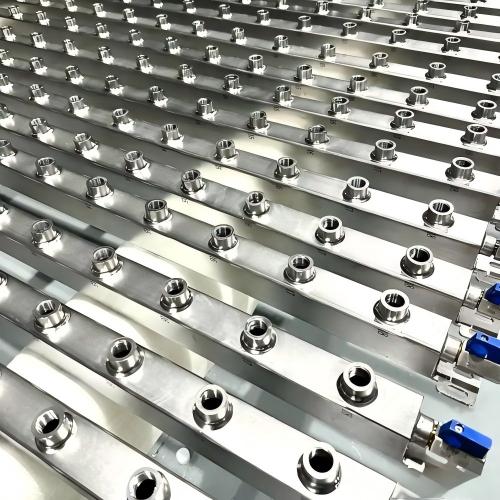
Welding quality determines 90% of immersion cooling reliability because the tank-to-tube and manifold-to-tube connections are machined parts joined by fusion. Manual TIG welding introduces two variables that inspection cannot fully correct: penetration depth and heat input consistency. If either varies, the weld may pass a static pressure test but develop micro-cracks after 200–500 thermal cycles--precisely the operating pattern of an immersion cooling tank.
China Super Tech addresses this through:
- Orbital welding with automated travel speed and arc control, removing human hand-speed variation.
- ISO 3834-certified welding procedures governing operator qualification, weld parameters, and inspection frequency.
- 100% leak inspection on every tube and assembly before shipment; helium leak detection is available for assembled manifolds where detection sensitivity is more critical than throughput.
Specifications and Customization Depth for Immersion Cooling System Integration
| Category | Parameter | Value Range | Standard |
| Dimensional envelope | Tube OD | 10×10 to 80×80 mm square; round equivalents per drawing | Custom |
| Dimensional envelope | Wall thickness | 0.5–3.0 mm | Custom |
| Dimensional envelope | Length | Up to 6000 mm | Custom |
| Material grade | 304 / 316L | Per application corrosion profile | ASTM A312, JIS G3459 |
| Internal surface | Roughness | Ra ≤0.4 μm achievable | Measured per roughness profilometer |
| Welding | Process | Orbital / TIG / laser | ISO 3834 |
| Surface finish | Condition | Polished, pickled, passivated | Internal cleanliness protocol |
Customization extends beyond tube dimensions. Immersion cooling system layouts rarely follow straight-line runs; engineering teams need bent tubes, U-bends, manifolds with multiple outlets, and pre-welded sub-assemblies that reduce on-site joint count. China Super Tech manufactures these in-house:
| Custom Dimension | Capability Range | Verification |
| Bent tubes | Custom radii per drawing | Dimensional CMM check |
| Manifolds | 2–8 outlets, custom spacing | 100% leak test per assembly |
| Pre-welded sub-assemblies | Tube-to-fitting, tube-to-manifold | Helium leak test on request |
| End finishing | Square-cut, bead-blasted, or passivated | Visual + roughness check |
The manufacturing cycle for a custom configuration runs 7–15 working days for standard geometries, with acceleration to 5–7 days for urgent projects. Drawing review happens before production commitment--the engineering team validates bend radius feasibility, connector compatibility, and coolant flow path before a single meter of tube is cut.
Immersion Cooling System Applications Across Deployment Types
| Industry | Typical Application | Recommended Spec | Operating Condition |
| AI data centers | High-density GPU cluster immersion tanks | 316L, Ra ≤0.4 μm internal finish, orbital-welded | 24/7 operation, 40–65°C coolant inlet |
| Edge computing | Compact immersion pods for distributed AI inference | 304 or 316L, 0.8–1.5 mm wall | Moderate thermal cycling, 3–7 kW per pod |
| Enterprise HPC | University and research supercomputing centers | 316L manifolds + pre-welded sub-assemblies | Batch workloads with rapid temperature swings |
| Energy storage | Battery cabinet immersion thermal management | 316L, leak-tested assemblies | Vibration environment, long idle periods |
| CDU manufacturing | Coolant distribution units feeding immersion tanks | Custom manifolds, multi-outlet configurations | Working pressure 1–6 bar, dielectric coolant |
Each deployment type imposes different demands. A GPU cluster runs near-continuous thermal load, so internal cleanliness and flow efficiency dominate. An edge computing pod cycles between idle and full load frequently, making weld endurance under thermal fatigue the critical parameter. China Super Tech's 12,000-ton annual capacity and 600+ supporting projects mean both high-volume CDU line supply and low-volume custom prototypes run on the same controlled process line.
Customer Validation in the Field
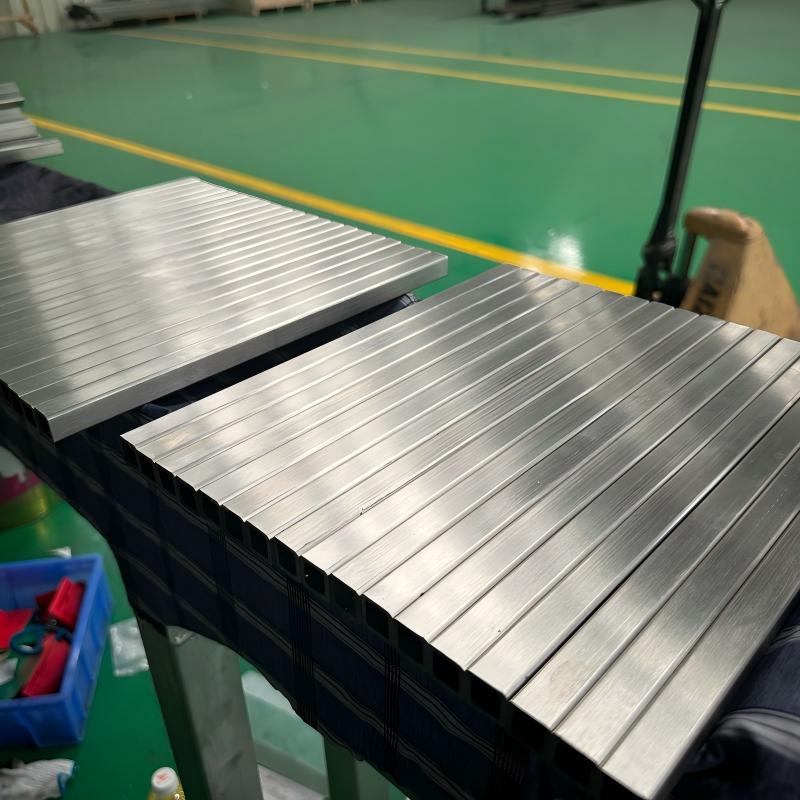
A Japanese CDU manufacturer standardized on 316L square tubes at 30×30 mm, 1.5 mm wall, Ra ≤0.4 μm internal finish--after three sequential batch orders, dimensional readings stayed within ±0.1 mm across all deliveries, enabling drop-in assembly without fit adjustments.
A Middle East energy storage integrator specified pre-welded manifolds with helium leak testing at 10⁻⁶ mbar·L/s level--zero field leakage reported across 4 months of continuous operation in ambient temperatures exceeding 45°C.
A German HPC research center ordered 2,400 meters of 316L bent tubes for a pilot immersion loop--the complete shipment cleared inspection on first pass, including weld radiography and dimensional reports per batch.
Customer voice: "Our existing rack design has very limited installation space, and standard liquid cooling components simply don't fit. We needed a partner who could bend, weld, and finish to our exact envelope--not a supplier who pushes catalog products."
Immersion Cooling System: Six Questions Engineers Ask
Q1: Does internal surface roughness of Ra ≤0.4 μm actually affect cooling performance?
+
-
Yes, measurably. Rough surfaces create micro-turbulence layers that trap particles and increase pressure drop. In a closed immersion loop running years without draining, loose particles from a rougher tube (Ra 0.8–1.6 μm) circulate and can settle on cold plates or pump bearings. A smoother inner wall at Ra ≤0.4 μm reduces particle generation at the source and keeps the coolant cleaner longer, directly cutting maintenance intervals and extending fluid life.
Q2: Why is 316L recommended over 304 for most immersion cooling applications?
+
-
316L contains molybdenum at 2.0–3.0%, which significantly improves pitting resistance in chloride environments. Dielectric coolants, especially ester-based and PAO formulations, contain additives that break down over time into mildly acidic compounds. 316L's low carbon content also prevents sensitization during welding--chromium carbide precipitation at weld heat-affected zones can reduce corrosion resistance in standard 304. For a cooling loop designed to run 5+ years, 316L provides a measurable safety margin against degradation that begins invisibly.
Q3: How is welding quality controlled when the entire loop must be leak-free?
+
-
China Super Tech applies ISO 3834-certified welding procedures. This means welders are qualified to specific process parameters, equipment settings are documented per procedure, and inspection frequency follows a defined plan. For immersion cooling components, China Super Tech uses orbital welding where geometry allows--this removes hand-speed variation and produces consistent penetration depth. Every tube and assembly undergoes 100% leak inspection before shipment; helium leak detection is available for manifolds where detection sensitivity must reach 10⁻⁶ mbar·L/s.
Q4: What dimensional tolerances can be held for custom manifolds and bent tubes?
+
-
Custom manifolds hold port spacing to ±0.1 mm and tube-to-manifold weld alignment per drawing. Bent tubes are verified by coordinate measuring machine, and China Super Tech's engineering team reviews bending radius feasibility before production to avoid sharp-radius cracks. For batch orders, each delivery includes dimensional inspection reports, so no incoming batch-whether the first or fifth-deviates from the original approval sample.
Q5: What production capacity is available for both prototyping and large-scale orders?
+
-
China Super Tech operates a 12,000-ton annual stainless steel pipe production facility with integrated processes from raw material inspection to final assembly. This supports single prototypes for development validation and continuous supply for mass production lines. Standard product lead time is 7–15 working days, with an accelerated path covering urgent projects about 30% faster. With products exported to 20+ countries and 600+ projects supported, capacity planning absorbs both small custom batches and multi-container volume orders.
After-Sales Service
- Warranty: All stainless steel cooling tubes and assemblies are covered against manufacturing defects from the shipment date.
- Response: Technical questions answered within 24 hours by engineering staff-not a sales desk.
- Documentation: Material certificates, dimensional reports, and weld inspection records provided per batch.
- Support channels: Direct WhatsApp or email connection to the production team that handled the order.
Logistics & Delivery
- Annual capacity: 12,000 tons-enough to supply continuous programs, not just one-off projects.
- Standard lead time: 7–15 working days for standard geometries.
- Expedited delivery: Available for time-sensitive deployments, with early delivery commitments honored as contract terms.
- Packaging: Export-grade crating with individual tube protection preventing surface contact damage and contamination during transit.
Request a Quote
Required information:
- Company name and email
- Product requirements (specs, quantity, target application)
Contact Options
- RFQ form: Submit this page's inquiry with your parameters
- WhatsApp: Direct chat with engineering during business hours
- Email: Technical drawings and requirement documents welcome for review
- Sample request: Prototype lengths shipped within 10–14 days of drawing approval
Response commitment: A manufacturer engineer replies within 24 hours. Current production slots for Q3 are filling; drawings received this week enter the review queue immediately. For urgent projects, ask for the expedited delivery schedule-the engineering team responds within 3 minutes of submission during working hours.
Hot Tags: immersion cooling system, China immersion cooling system manufacturers, suppliers, factory, fluid cooling pipeline, high pressure liquid cooling pipe, industrial cooling pipe system, optimized flow cooling pipe, process condenser tube, thermal exchange cooling pipe
You Might Also Like



Send Inquiry
