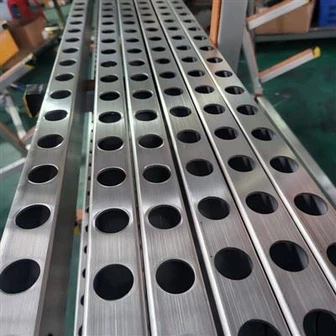
Liquid Cooling At AI Scale: Why Pipe Quality Becomes A Data Center Reliability Issue
At AI-scale data centers, liquid cooling pipe is no longer just plumbing. It is part of the reliability chain that carries coolant between the cold plate, CDU and heat-rejection loop.
A single rack of GB200 NVL72 servers draws 120 kW, so the heat has to move somewhere. In one 2023 Middle East colocation case, a coolant weep was traced to a weld zone inside a manifold. Six racks were taken offline for 11 days for teardown and acceptance testing. The failed tube cost less than $90; the delay cost six figures.
The Core Thesis: A Cooling Loop Is a Chain of Weld Joints Under Thermal Cycling
Data center liquid cooling tube carries coolant between the cold plate, CDU and heat-rejection loop. Its internal surface, weld integrity and dimensional accuracy determine whether the coolant stays inside the system. As a facility scales from 200 kW to 20 MW, the number of tubes and joints rises sharply, turning pipe quality into an availability consideration rather than a simple purchasing line item.
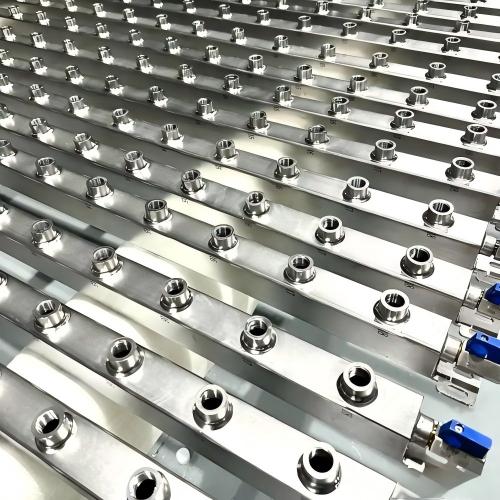
Four recurring failure modes
- Weld-zone micro-leaks: thermal cycling can expose porosity that passed a 1.0 MPa hydrostatic test.
- Particulate accumulation: rough internal surfaces can release oxide or forming particles that migrate toward cold-plate microchannels.
- Dimensional drift: wall-thickness variation can change bending geometry and create manifold connection misalignment.
- Installation mismatch: tubes that do not match the drawing create rework, where contamination and connection errors can be introduced.
Each failure mode can be traced back to a process-control decision made before the rack goes live.
What Actually Goes Wrong When Coolant Meets a Marginal Tube
Three warning signals often appear during procurement and project reviews before a leak occurs.
A drawing may specify 10×10 mm square tube with a 2.0 mm wall, while delivered dimensions drift to 10.2 mm. At the manifold, a fitting may not seat correctly and the installer may have to force the connection.
If feasibility, bend-radius, quantity and leak-test questions remain unanswered for days, project teams may change suppliers simply to keep the schedule moving.
If joints leak during commissioning but the production batch has no clear QC record, responsibility can move between supplier and installer while the project milestone is delayed.
For compact rack layouts, the practical question is often whether the delivered tube matches the drawing and whether its weld and inspection records can be trusted.
For applications requiring a direct connection between the cooling loop and rack-side distribution, see the 316 liquid cooling pipe product page for the available material and process information.
How Weld Control Separates a Reliable Loop from a Maintenance Liability
The weld is one of the most important control points in a liquid cooling tube. General pressure-pipe compliance does not by itself describe how a joint behaves under repeated thermal cycling.
China Super Tech applies an ISO 3834-based welding quality management system and uses orbital welding for connection consistency. The process reduces operator-to-operator variation by controlling arc movement and heat input. Tubes then undergo 100% leak inspection before shipment, including hydrostatic testing and, when requested, helium mass-spectrometer leak detection down to 1×10⁻⁹ Pa·m³/s.

The source article also describes a Southeast Asian colocation case in which weld-zone micro-weeps appeared after roughly 14 months of continuous operation, requiring disassembly, re-inspection and re-testing. The lesson is straightforward: a low-cost tube purchase can become expensive when a leak reaches an operating cooling loop.
Internal Surface Quality Is a Coolant-Cleanliness Decision
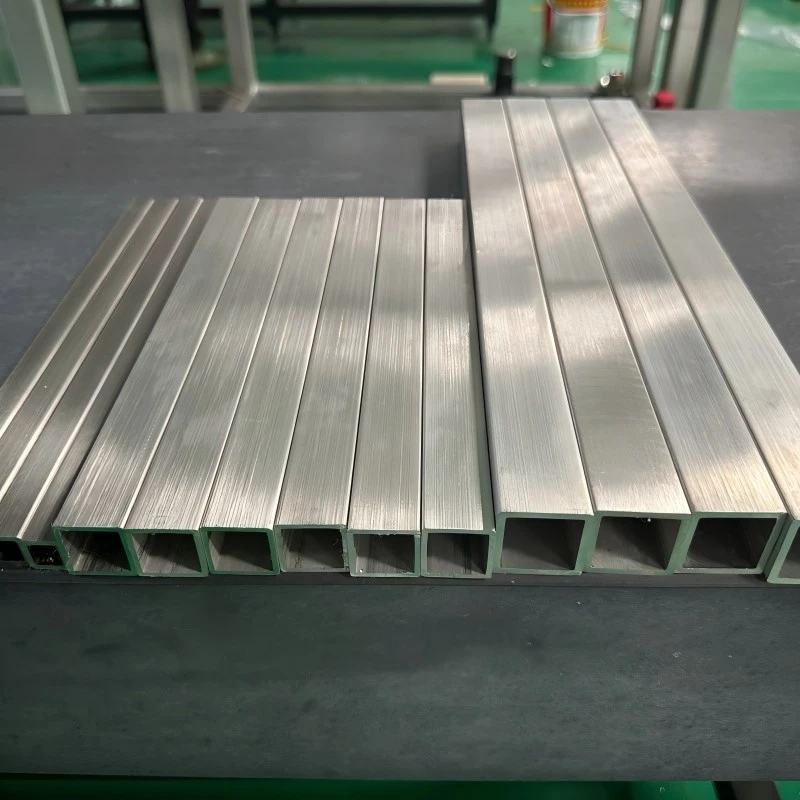
Two tubes can meet the same dimensional specification but behave differently inside a closed cooling loop because the internal surface directly contacts the coolant.
The original article highlights conventional industrial tubing at roughly Ra 1.6–3.2 μm and explains how surface valleys can retain oxide scale and forming debris. Those particles may later migrate downstream toward fine cold-plate channels.
China Super Tech controls internal surface roughness down to Ra ≤0.4 μm through polishing, pickling and passivation.
Custom Geometry and Supply Scale Are the Same Buying Decision
A liquid cooling system is rarely a straight-tube-only installation. Tubes run between CDUs, manifolds and rack structures, often with specific bends and connection positions. For that reason, customization is often part of the baseline project requirement.
Available customization range
- Square tube cross-sections: 10×10 mm to 80×80 mm
- Wall thickness: 0.5–3.0 mm
- Length: up to 6000 mm
- Customized bending, manifold fabrication and integrated liquid cooling assemblies
For distribution components, the data center liquid cooling manifold pipe page provides the corresponding manifold specifications and manufacturing details.

China Super Tech states an annual stainless steel pipe production capacity of 12,000 tons, supply to 20+ countries and more than 11 years of industry experience. Standard product lead time is stated as 7–15 working days, with an urgent-project delivery path subject to production capacity.
How to Evaluate a Liquid Cooling Tube Supplier Before You Commit an Order
- Material certification: request batch-specific chemical composition records to ASTM A312 or JIS G3459 and confirm the grade against the coolant chemistry.
- Weld procedure: request the weld procedure qualification information and confirm whether orbital welding is used for the specified joint.
- Leak test: define the test method and acceptance threshold in the purchase order. Hydrostatic and helium testing serve different purposes.
- Internal roughness: require delivered-goods measurement and reporting of Ra values, with Ra ≤0.4 μm where that is the project specification.
- Dimensional inspection: verify outer dimensions, wall thickness and bend radius against the approved drawing.
- Packaging: specify protection for cleaned internal surfaces so the required cleanliness is maintained during transportation.
For projects using 304 rather than 316L, the site's 304 liquid cooling pipe page can be used as a separate reference when comparing material options.
FAQ
Data center liquid cooling tube is typically manufactured from 304 or 316L stainless steel, selected according to coolant compatibility and corrosion requirements. The source article specifies ASTM A312 and JIS G3459 for China Super Tech products and recommends confirming the material grade per batch.
How do you prevent leaks in liquid cooling tube joints?Leak prevention depends on weld-process control and inspection. China Super Tech uses ISO 3834-based welding quality management with orbital welding and 100% leak inspection before shipment. Hydrostatic testing is used, with helium mass-spectrometer detection available on request down to 1×10⁻⁹ Pa·m³/s.
What internal surface roughness should liquid cooling tube have?The source article specifies Ra ≤0.4 μm for its liquid cooling tube application and describes polishing, pickling and passivation as the surface-treatment route. The delivered tubes should be checked against the project specification.
What is the lead time for custom liquid cooling tube?The source article states 7–15 working days for standard products. Custom dimensions, bends and assemblies are quoted according to geometry and inspection requirements. Urgent-project delivery can be arranged when production capacity allows.
Can liquid cooling tube be customized for tight rack spacing?Yes. The source article describes customized bending, manifold fabrication and integrated liquid cooling assemblies based on customer drawings, allowing the tube geometry to be prepared before installation instead of relying on extensive on-site adaptation.
How does tube quality affect total project cost?Tube quality affects total cost through rework, inspection and downtime as well as the initial purchase price. The source article gives an example in which a 15–20% unit-price saving was offset by dimensional deviation, rework and additional inspection costs.
Get Your Tube Drawing Reviewed Before You Order
China Super Tech reviews customer drawings for dimensions, bending requirements, connection methods and application conditions, then confirms feasibility, lead time and test method in writing.
Send the tube drawing and loop operating conditions for a technical review covering material grade, weld process, leak-test method, surface roughness specification and dimensional inspection plan.
Submit Your Project Requirements