Why 316L Stainless Steel Liquid Cooling Pipe With Orbital Welded Assemblies Is The Best Choice For AI Data Centers
A Failed CDU Connection Cost One Operator 14 Hours of Downtime
In March 2024, a data center operator in Frankfurt watched a single leaking weld joint shut down ...
The operator's mistake wasn't choosing stainless steel. It was choosing the wrong stainless steel-and the wrong welding process.
For AI data centers pushing 100kW+ per rack, the cooling loop is not a commodity plumbing circuit. It is a precision thermal management system where a single weld defect, one rough inner surface, or a material incompatibility with glycol-based coolant can cascade into expensive downtime.
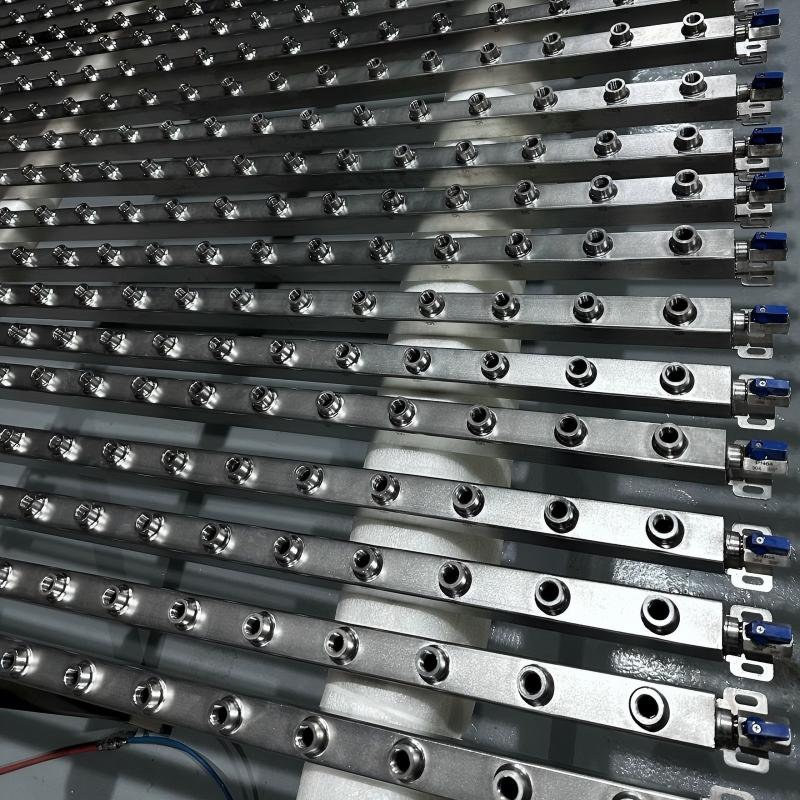
What Makes 316L Different from Standard 304 in a Cooling Loop
The material choice determines how the pipe behaves inside a closed-loop liquid cooling system. 316L stainless steel contains molybdenum (Mo), which 304 does not. This 2-3% Mo addition delivers measurably higher resistance to pitting corrosion in chloride environments and long-term coolant exposure.
The "L" in 316L means low carbon (≤0.03%). This prevents chromium carbide precipitation at weld boundaries-a form of corrosion that eats welds from the inside out. In a closed cooling loop flushed with propylene glycol and corrosion inhibitors, that weld boundary protection is not optional. So what this means for your system: If your cooling loop uses glycol-based coolant or operates in environments with any chloride exposure, 316L provides a service life advantage that 304 cannot match. The pitting resistance number (PREN) is the direct quantifiable difference.
| Property | 304 Stainless Steel | 316L Stainless Steel | Test / Standard |
|---|---|---|---|
| Molybdenum Content | 0% | 2–3% | ASTM A312 |
| Pitting Resistance Equivalent Number (PREN) | 18–20 | 24–28 | ASTM G48 |
| Resistance to Chloride Attack | Moderate | High | ASTM G48 Method A |
| Low Carbon Variant | Yes | Yes (L = Low Carbon) | ASTM A312 |
| Typical Coolant Compatibility | Pure Water / DI Water | Glycol-Water, Brine, Aggressive Coolants | - |
| Best Match Scenario | Low-corrosion, Budget-sensitive Cooling Loops | High-density AI Liquid Cooling, Long Service Life | - |
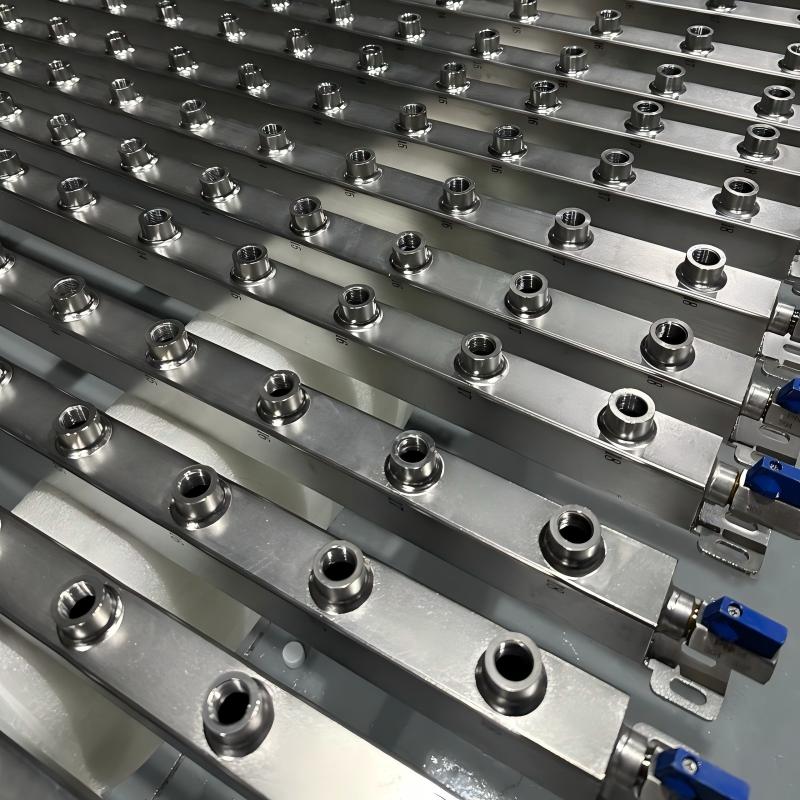
Why Orbital Welding Isn't Optional-It's the Leak Prevention Standard
Manual welding on a 10mm capillary tube is a roll of the dice. Weld penetration varies with the welder's hand, fatigue level, and lighting conditions that day.
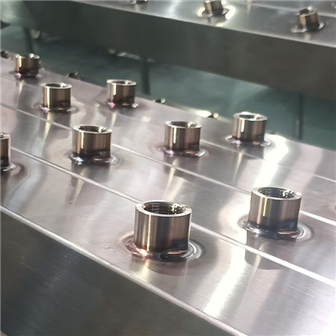
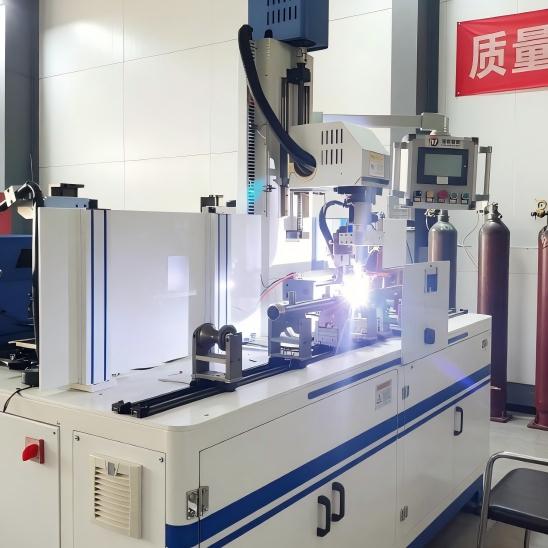
Orbital welding removes the human variable. The welding head rotates mechanically around the tube-controlled speed, controlled heat input, controlled penetration. The result is a repeatable, full-penetration weld on every joint.
China Super Tech applies ISO 3834-certified welding processes, including orbital welding, for liquid cooling assemblies. Every welded component undergoes 100% leak inspection before shipment-hydrostatic and pneumatic testing-not batch sampling.
The inspection protocol: After welding, each assembly is pressure-tested. The inspector watches the pressure gauge hold steady for a specified duration. One sharp click-metal seating under stress-then silence. That silence is the weld passing.
3 Questions You Must Ask Any Liquid Cooling Pipe Supplier
Most buyers evaluate stainless steel pipes on price and lead time. Three technical questions separate a liquid cooling specialist from a general tube mill:
Q1: What is your internal surface roughness, and how is it achieved?
Standard industrial tubing often ships with internal roughness around Ra 0.8-1.6 μm. That texture traps particles, which accumulate in the loop and eventually block micro-channels in cold plates. China Super Tech controls internal surface treatment-polishing, pickling, passivation-down to Ra ≤0.4 μm. Run your gloved finger along the inner wall: glass-smooth, no burrs, no weld bead protrusion. That finish is not cosmetic; it is a flow-efficiency and cleanliness specification.
Q2: Do you control the full manufacturing chain in-house?
Many suppliers outsource forming, welding, and surface treatment to different factories. When a weld defect appears, Factory A blames Factory B blames Factory C. China Super Tech integrates raw material inspection, tube forming, welding, surface treatment, machining, and assembly in one facility in China. One process owner. One quality standard. No coordination gray zone.
Q3: Can you produce assemblies, or only straight pipe?
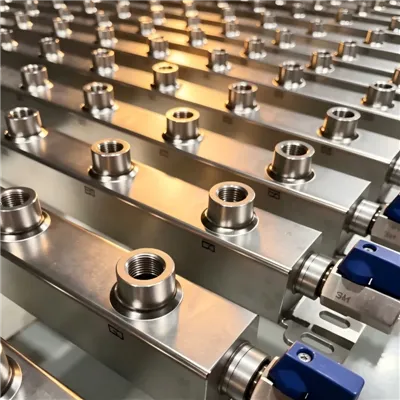
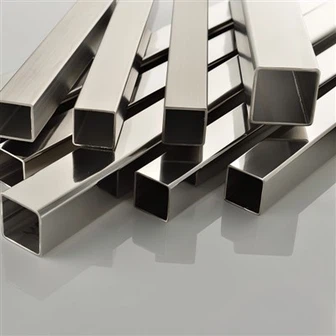
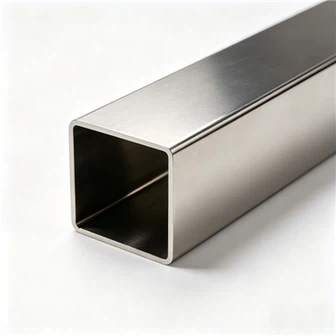
A data center cooling loop is not straight pipe. It is manifolds, bends, and transitions. Suppliers limited to straight tubes force you to buy fittings separately and weld them yourself-a new risk point. China Super Tech manufactures customized bent tubes, manifolds, and complete liquid cooling assemblies, supporting square tubes from 10×10 mm to 80×80 mm, wall thickness 0.5-3.0 mm, and lengths up to 6000 mm.
What Happened When a Singapore Operator Switched to 316L Assemblies
A Singapore-based CDU system integrator approached China Super Tech after a difficult project. Their previous supplier delivered straight 304 pipe from one factory and had them source welded manifolds from a local fabricator. The multi-supplier approach created a quality responsibility gray zone: when a manifold developed a leak after 6 months, neither supplier accepted responsibility.
Working with China Super Tech, they switched to:
316L material per ASTM A312, with full material certificates per batch
Orbital welded manifolds and assemblies, 100% leak tested before shipment
Internal surface roughness at Ra ≤0.4 μm
The result: their second-generation CDU system passed commissioning with zero weld defects on the first attempt. The quality responsibility shifted from "which supplier?" to "the manufacturer."
The Cost of a Weld Failure vs. the Cost of Prevention
Let's quantify the risk. Industry data indicates that a single liquid cooling loop failure in a high-density AI cluster typically results in 8-24 hours of reduced computing capacity.
| Cost Item | Estimated Cost (USD) |
|---|---|
| Reduced GPU Cluster Utilization (14 Hours) | $28,000–$85,000 |
| Emergency Service Engineer Call-out | $2,500–$6,000 |
| Cooling Fluid Loss & Disposal | $800–$2,500 |
| Estimated Total Cost of a Single Weld Failure | $31,300–$93,500 |
The cost difference between 304 general-purpose pipe and 316L liquid cooling pipe with orbital welding is often under $500 for a typical CDU assembly. The prevention cost is measured in hundreds. The failure cost is measured in tens of thousands. The math doesn't lie.
What to Send Us for a Fast, Accurate Feasibility Check
Getting an accurate quote for 316L liquid cooling assemblies requires three inputs. Send them together and you'll receive a technical review within 24 hours.
Drawing or sketch - dimensions, bend radii, connection types
Coolant type - glycol concentration, operating temperature range
Quantity and target timeline - prototype, pilot, or mass production
Our engineering team reviews the drawing for manufacturability, confirms the correct material grade, and proposes a welding and testing plan before you commit to a purchase order. This front-end review is where costly design errors are caught-before tooling, before materials, before welds.
Final Check-3 Red Flags in a Liquid Cooling Pipe Supplier
When evaluating your current or potential suppliers, run through this checklist:
No ISO 3834 certification - This welding quality standard demonstrates controlled welding processes, which is the core of leak prevention. A supplier without it is managing welding quality informally.
No internal cleanliness specification - If a supplier cannot state internal surface roughness, they treat your cooling loop like a plumbing line. That is a risk that accumulates over months.
No in-house assembly capability - Multi-supplier coordination shifts responsibility away from one accountable partner, exactly where costly failures originate.
The cooling loop is the quiet workhorse of the AI data center: always running, rarely noticed, and uniquely expensive when it fails. Choosing the right pipe material, the right welding process, and the right manufacturing partner is a risk transfer decision-not a commodity purchase.