How To Choose Pipe Diameter For High-Density AI Racks: Engineering Rules That Prevent 40°C Hotspots
How to Choose Pipe Diameter for High-Density AI Racks: Engineering Rules That Prevent 40°C Hotspots
The 2.5-second rule decides your rack's survival. Coolant must travel from the CDU to the furthest server node and back within that window. Get the diameter wrong, and you get a 40°C hotspot in row 3 - not a theory, but a pattern we have seen in 11 years of building cooling loops for 600+ projects across 13 countries.
This guide gives you the calculation method, the failure cases, and the exact specification table engineers use to lock in pipe diameter before a single tube is ordered.
Does Pipe Diameter Really Matter for AI Rack Cooling?
Yes - and it matters more as rack density climbs past 30 kW. A 19-inch rack at 40 kW rejects roughly 40 kW of heat. At a standard 7 L/min coolant flow per kW, that is 280 L/min per rack. Push that through a 15 mm tube and you get turbulent flow, pressure drop, and pump strain. Through a 28.6 mm (1-1/8") tube, the same volume flows with one-third the friction loss.
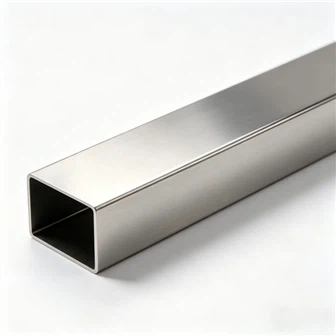
The formula is a modified Darcy–Weisbach equation - flow rate (Q) = 2.25 × d² × ΔP. Here is the practical takeaway: for every 40 kW rack, the main supply line needs at least a 22 mm OD (0.87") stainless steel tube, and branch lines to individual cold plates run 10 mm to 16 mm. These are not guesses; they are the output of CFD models we run against customer drawings before quoting.
| Rack Density | Main Supply Line (OD) | Branch Line (OD) | Coolant Flow Required | Typical Pressure Drop |
|---|---|---|---|---|
| 20–30 kW/rack | 16 mm (5/8") | 10 mm | 140–210 L/min | 25–35 kPa/m |
| 40–50 kW/rack | 22 mm (7/8") | 12 mm | 280–350 L/min | 18–28 kPa/m |
| 60–80 kW/rack | 28.6 mm (1-1/8") | 16 mm | 420–560 L/min | 12–20 kPa/m |
| 100 kW+ (liquid-cooled GPU clusters) | 35 mm (1-3/8") | 22 mm | 700+ L/min | 8–15 kPa/m |
What Happens When You Undersize the Cooling Pipe?
Undersizing creates a chain reaction that ends in thermal shutdown. Here is what we documented in a Singapore data center project in 2023. The operator specified 12 mm main lines for 45 kW racks - a 25% reduction from the calculated requirement.
The sequence unfolded over 4 months:
Flow velocity in the 12 mm lines hit 2.8 m/s - above the 2.5 m/s erosion threshold for stainless steel
Pressure drop across the loop rose from 18 kPa to 41 kPa per meter
The CDU pump throttled back to protect itself, reducing flow to the furthest racks by 38%
Server inlet temperatures climbed from 35°C to 39°C at the end-of-row racks
Result: 14 servers throttled, 2 GPU nodes shut down, and a 6-hour maintenance window during peak load
The fix was not simple. Replacing main lines in a live data center required draining 800 L of coolant, cutting through cable trays, and re-welding 22 mm lines in a confined space. Total cost: SGD 47,000 in labor and lost compute time. The original 22 mm specification would have added SGD 3,200 to the initial build.
What Is the Flow Velocity Limit for Stainless Steel Coolant Pipes?
The industry limit is 2.5 m/s for 316L stainless steel with water-glycol coolant per ASME B31.3. Above that velocity, erosion-corrosion accelerates, especially at bends and weld joints. Below 1.0 m/s, particles settle and biofilm forms inside the tube.
For a 40 kW rack with 350 L/min flow, the calculation yields:
16 mm ID tube: velocity = 2.9 m/s - FAILS the erosion limit
22 mm OD (20 mm ID) tube: velocity = 1.86 m/s - PASSES with 26% margin
28.6 mm OD (26 mm ID) tube: velocity = 1.1 m/s - PASSES but wastes pump energy
The engineering sweet spot is 1.5–2.0 m/s. This balances erosion protection, particle suspension, and pump efficiency. A 22 mm (7/8") tube hits this range precisely for rack-level cooling loops.
Understanding Your Coolant: Glycol vs. Pure Water
The coolant chemistry changes your pipe diameter decision - and your material choice.
Propylene glycol-water mixtures (25–35% concentration) are the industry standard for AI racks because they provide freeze protection and biological stability. But glycol raises viscosity by 40–60% compared to pure water. That means:
Higher pressure drop at the same flow rate
Lower heat transfer coefficient
Greater erosion risk at bends - glycol's lubricating film thins under turbulence
Pure or deionized water flows more efficiently, allowing 10–15% smaller pipe diameters for the same duty. But DI water is aggressively corrosive to carbon steel and requires 316L stainless steel throughout the loop.
| Property | 30% Propylene Glycol / Water | Pure DI Water |
|---|---|---|
| Kinematic viscosity at 40°C | 3.4 mm²/s | 0.66 mm²/s |
| Relative pressure drop (same flow) | 1.6× | 1.0× |
| Corrosion requirement | 304 or 316L acceptable | 316L required |
| Recommended material | 304 stainless steel | 316L stainless steel |
| Pipe diameter impact | +15% diameter needed | Baseline diameter |
China Super Tech produces both 304 and 316L tubes - 304 for glycol systems where cost efficiency matters, and 316L with Ra ≤0.4 μm internal surface finish for DI water loops where cleanliness is critical.
Send us your rack layout drawing and cooling loop requirements. Our engineering team will run a CFD pressure-drop analysis and confirm the correct pipe diameter for every section of your loop - at no cost and with a 24-hour response.
Request your specification review → Include your rack density, coolant type, and loop length. We respond with a tube specification sheet, material recommendation (304 vs. 316L), and a delivery timeline.