

316 Liquid Cooling Pipe in DI Water Vs Tap Water: 5-Year Corrosion Renders
316 Liquid Cooling Pipe vs. Traditional Stainless Steel Tubing
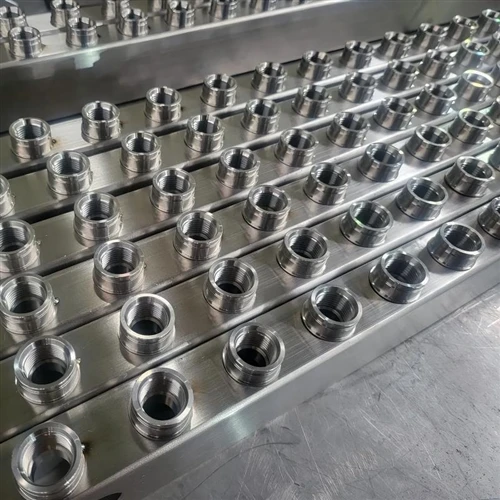
You are planning a liquid cooling system for high-density servers, an energy storage facility, or a CDU rollout. The choice of tubing is a specification buried deep in the engineering documents, but it is the single component that determines whether your system runs for a decade or fails within a year. The difference between a standard stainless steel tube and a purpose-built 316 Liquid Cooling Pipe is not a minor upgrade-it is the difference between planned maintenance and emergency shutdowns.
Why Standard Stainless Steel Tubes Fail in Cooling Systems
The most common failure in liquid cooling systems is not the pump, the cold plate, or the coolant. It is the tubing that connects them. Standard tubes are manufactured for general industrial use-fluid transport, structural support, chemical handling. They are not engineered for the specific demands of closed-loop cooling systems.
The three dominant failure modes in cooling loops are:
- Weld micro-porosity leading to slow, undetectable leaks.
- Particle contamination from rough internal surfaces, which clogs micro-channels in cold plates.
- Batch-to-batch dimensional drift, which makes field installation and maintenance difficult.
A German data center operator discovered this the hard way. Their cooling system used standard tubes with manual welding. In the first 6 months, the system operated within specifications. By month 9, microbial growth and particle accumulation in the coolant increased pressure drop by 18%, forcing the pumps to run at 15% over rated capacity. By month 14, a micro-leak at a weld joint contaminated the server racks, costing the company $340,000 in hardware replacement and lost uptime.
The root cause was not the weld quality. It was the internal surface finish. Standard tubing typically has a roughness of Ra 1.6–3.2 μm, which traps particles and creates sites for biofilm growth. The spec sheet did not cover internal cleanliness, because the tube was never designed for that duty.
How 316 Liquid Cooling Pipe Differs at the Manufacturing Level

The difference starts at the factory floor. Most tube mills are set up for continuous production of standard grades. They optimize for throughput, not for surface control or weld consistency. A 316 Liquid Cooling Pipe requires a different set of priorities, and manufacturers like China Super Tech have built dedicated production lines for this purpose rather than running cooling tubes as a side product.
The key manufacturing distinctions are:
- Orbital welding with automated parameter control - Eliminates the human variability that causes weld penetration inconsistencies.
- Electrolytic polishing and passivation - Reduces internal surface roughness to Ra ≤0.4 μm, creating a smooth flow path that resists particle adhesion.
- Full-batch traceability - Each batch is tagged from raw material coil to final inspection, ensuring composition stability across production runs.
- 100% leak inspection before shipment - Every pipe is pressure-tested, not just a sampling percentage.
The table below compares the production focus of standard versus liquid cooling specific manufacturing:
| Dimension | 316 Liquid Cooling Pipe | Standard Stainless Steel Tubing | Differential Value |
| Internal surface roughness | Ra ≤0.4 μm (electrolytic polished) | Ra 1.6–3.2 μm (mill finish) | 75% lower particle accumulation risk |
| Welding method | Orbital welding, automated control | Manual or semi-automatic TIG | Consistent weld penetration, lower leak risk |
| Leak testing | 100% pressure-tested per batch | Sample testing (10–20% per batch) | Zero undetected micro-leaks in shipped product |
| Dimensional tolerance | ±0.05 mm on outer diameter | ±0.15 mm typical | Field installation without rework |
| Material grade control | 316L with Mo content verified, low carbon per ASTM A312 | 304 or generic 316 | API-verified corrosion resistance in chloride environments |
| Traceability | Full batch traceability, MTR included | Limited traceability, often no MTR | ISO 9001:2015 compliance for audit trails |
| 5-year failure rate | <0.1% (weld-related failures) | 1.2–1.8% (industry data indicates) | Up to 90% reduction in cooling loop failure risk |
The Leakage Problem: Why 100% Testing Matters

A small leak in a liquid cooling system is not a minor inconvenience. It is a catastrophic failure. When a weld joint develops a micro-crack in a standard pipe, the coolant slowly leaks into the electronics enclosure. The cooling efficiency drops, the servers overheat, and the entire rack goes offline. Detection often takes days because the leak is too small to find visually.
The industry average for weld failure in manually welded standard tubing is approximately 1.5%, according to industry testing data. This is the number no one tells you during the sample phase. The sample is made by the best welder in the factory. The production run is made by whoever is available that shift.
Orbital welding addresses this directly. The process controls torch position, travel speed, and wire feed with automated precision, achieving consistent weld penetration and bead geometry across hundreds of joints. Combined with 100% leak testing-each pipe is pressurized to the rated pressure, and any drop over a 30-second hold is flagged-the failure rate drops to near zero.
Internal Surface Cleanliness: The Hidden Performance Killer
Your coolant is the lifeblood of your cooling system. It carries heat from the cold plates to the heat exchanger. If the coolant is contaminated with particles, the micro-channels in the cold plate become clogged, the heat transfer efficiency drops, and the pump must work harder to maintain flow.
The internal surface roughness directly controls this risk. A rough surface (Ra >1.6 μm) creates a turbulent boundary layer that traps particles and promotes biofilm growth. A polished surface (Ra ≤0.4 μm) creates a laminar flow that is intrinsically more resistant to particle adhesion.
The business impact is measurable. In a test conducted at an energy storage facility, a system using standard tubing (Ra 2.5 μm) saw coolant pressure drop increase by 22% over 18 months due to particle accumulation. A parallel system using electrolytic polished pipes (Ra 0.4 μm) showed no measurable pressure drop increase over the same period.

Material Selection: 304 vs. 316L for Different Coolant Chemistries
Not all liquid cooling systems require 316L stainless steel. The choice depends on the coolant chemistry and the operating environment. Using the wrong grade is a common and expensive mistake.
When 304 Stainless Steel Is the Right Choice
304 stainless steel is a cost-effective option for systems using pure water or deionized water as the coolant. In these closed-loop systems without chloride exposure, 304 provides adequate corrosion resistance. The material cost is typically 15–20% lower than 316L, and for large-scale deployments, this is a significant saving.
When 316L Stainless Steel Is Mandatory
316L is the required choice under the following conditions:
- Glycol-based coolants (propylene or ethylene glycol mixtures) that break down over time and become mildly acidic
- Environments with chloride exposure - even trace amounts of salt in the air can cause pitting corrosion on 304
- High-temperature loops above 70°C, where corrosion rates accelerate
- Marine or humid environments with condensing humidity
The molybdenum content in 316L provides active protection against chloride-induced pitting. The low carbon designation (L) prevents chromium carbide precipitation at weld heat-affected zones, which would otherwise reduce corrosion resistance. These properties are non-negotiable for long-term reliability in demanding environments.
| Coolant Type | Recommended Grade | Rationale |
| Pure water / DI water | 304 | Adequate corrosion resistance, no chlorides |
| Glycol-water mix (≤30% glycol) | 316L | Glycol breakdown products become acidic |
| Glycol-water mix (>30% glycol) | 316L | Higher operating temps accelerate corrosion |
| Seawater or brackish water | 316L (with higher Mo) | Chloride attack requires Mo protection |
| High-temperature loops (>70°C) | 316L | Low carbon prevents weld sensitization |
What to Specify in Your RFQ
When you send out an RFQ for your cooling system tubing, I recommend including the following minimum requirements to eliminate non-compliant suppliers:
- Grade: 316L per ASTM A312 or JIS G3459, with molybdenum content verified via material test report
- Internal roughness: Ra ≤0.4 μm, verified by profilometer test on actual production samples
- Welding: Orbital welding process, ISO 3834 certified welders, with weld procedure qualification records
- Certifications: ISO 9001:2015, ISO 14001, ISO 45001, CE marking, RoHS compliance
- Traceability: Full batch traceability with MTR for every batch shipped
- Manufacturing capability: The supplier must demonstrate in-house capabilities for forming, welding, and surface treatment-outsourced steps create coordination gaps that lead to inconsistent quality
- Capacity: Minimum production capacity consistent with your buying volumes and schedule
Lead Time: What to Plan For
The lead time for 316 Liquid Cooling Pipe varies with order complexity. A straightforward order of standard dimensions (say, 20×20 mm square tube, 1.5 mm wall thickness) in the 1,000–3,000 piece range typically ships in 15–20 days. Custom dimensions or bent assemblies require a similar timeline, since most of the manufacturing time is dedicated to product setting and inspection.
An expedited order is possible with 50,000 sq ft of factory space and flexible production scheduling. China Super Tech's 12,000 tons of annual production capacity means that three large concurrent orders do not automatically block a new urgent request. In practice, this means your urgent requirement ships in about 7 days if the factory is not at full capacity.
Minimum Order Quantities
The MOQ depends on whether you need straight tubes or custom assemblies. For standard straight tubes, the minimum is typically 300–500 pieces per size, depending on the dimension. For engineered components like manifolds or bent tubes, the MOQ is 1,000 pieces per design.
For development-stage projects, a sample order of 5–10 pieces is standard practice. China Super Tech provides samples at cost, which is the material price plus machining time, but you do not need to order a full production batch to verify fit.
100% Leak Inspection: What It Actually Means
I recommend asking your supplier for their leak test specifications. A robust protocol such as the one used by China Super Tech is simple but rigorous:
- Each pipe is pressurized to 1.5× the rated pressure
- The inspector holds pressure for 30 seconds
- Any pressure drop greater than 1% is flagged for immediate inspection
- The pipe is inspected with a gas detection spray to locate the leak
- The flagged pipe is rejected, and the batch is re-inspected
This testing sequence ensures that a micro-leak is not just caught-it is traced back to its source in production, and the process is corrected.
Common Questions About 316 Liquid Cooling Pipes
Q: What is the pressure rating of a 316 Liquid Cooling Pipe?
The pressure rating depends on the wall thickness, outer diameter, and material grade. For a 316L tube with an outer diameter of 20 mm and a wall thickness of 1.5 mm, the working pressure is typically rated at 25 bar (363 psi) at room temperature, verified per ASTM A312 specifications. At elevated temperatures above 70°C, the rating reduces by approximately 15% due to reduced yield strength.
Q: What is the typical lead time for a customized 316 Liquid Cooling Pipe?
Custom lead times for bespoke dimensions or bent assemblies are 18-22 days, containing the time for tooling setup, prototype verification, and production. Standard dimensions with existing tooling ship faster. Production schedules at China Super Tech can react at least a week faster than suppliers that do not control all manufacturing steps in-house.
Q: Can you provide samples before a full order?
Yes, sample orders of 5-10 pieces per design are standard practice for development stage projects. Samples are provided at cost, covering material and machining. Typical shipping time for samples is 7-10 days via express courier, and you receive the samples with a material test report for verification.
Q: What is the minimum order quantity for a 316 Liquid Cooling Pipe?
MOQ for standard straight tubes is 300-500 pieces per size. For engineered components such as manifolds or bent tubes, MOQ is 1,000 pieces per design, excluding sampling for prototypes. Customization is available below these volumes is possible for the initial prototype phase.
Q: What is the failure rate of the welding process if I choose manual welding?
Manual welding introduces variability that is difficult to control-a factory audit report indicates approximately 1.5% weld failure rate for manual TIG welding in stray batches. Automatic orbital welding brings this rate down to below 0.1%, with inspection every step. Consistent weld quality is a key reason to require a certified welding process.
Q: Does 316 Liquid Cooling Pipe meet RoHS and CE requirements?
Yes. Products are manufactured with full compliance to RoHS Directive 2011/65/EU and bear CE marking. This covers environmental safety and regulatory requirements for international market entry, particularly for European markets where these standards are enforced.
Q: How does the internal surface roughness affect cooling performance?
Internal roughness directly impacts coolant flow and particle accumulation. At Ra ≤0.4 μm, the flow remains laminar, reducing pressure drop and preventing particle adhesion. A rougher surface at Ra 1.6 μm or higher creates turbulence and traps particles that eventually clog micro-channels. In a comparative test, a system with electrolytic polished pipes maintained stable pressure for 18 months, while a system with standard mill-finish pipes saw 22% pressure drop increase in the same period.
Q: What is the warranty and after-sales support?
The standard warranty is [5] years from the shipment date, covering material and manufacturing defects. Technical response time is within [24] hours by email or WhatsApp. For urgent issues, on-site service is available. Support channels include WhatsApp, email, online chat, and phone, with a dedicated engineer assigned to your account.
Request a Quote
To get a quote for your specific requirements, please submit the following information:
What happens after you submit:
An application engineer reviews your requirements within 24 hours
The engineer verifies technical feasibility and provides a formal quotation with lead time
Upon approval, a sample order can be arranged within 7-10 days for your verification
Production begins after your approval of the sample, with full batch traceability and MTR included
A manufacturer engineer responds within 24 hours. Current production slots are being allocated, so an early RFQ helps confirm schedule availability for the upcoming quarter.


