Leakage in The Liquid Cooling System: A Burden That The Data Center Cannot Bear

As the power consumption of AI computing clusters per server rack keeps rising, liquid cooling technology has become a standard feature in data centers. However, the subsequent risk of pipeline leakage has always been the biggest concern for customers. Once the liquid cooling system leaks, the insulating coolant seeps into the server chassis, directly causing short circuits and burnouts of the GPU or CPU motherboard. This not only means a loss of tens of thousands of dollars for a single device, but also may trigger a chain reaction, causing business disruptions across the entire rack or even across multiple racks, with potential losses reaching millions of dollars. Therefore, building a "zero-leakage" liquid cooling pipeline system is the top priority for all computing infrastructure construction.
Analyzing the causes of leakage, they mainly lie in unstable manufacturing processes and material defects. First, the weld quality, where the micro air holes and incomplete fusion defects in ordinary industrial welded pipes are often difficult to detect in the initial tests, but become time bombs in the future. Uneven wall thickness of the pipe material leads to uneven pressure-bearing capacity, and under the pulsating pressure of the pump start and stop, the weak points are prone to plastic deformation. In addition, the day-night fluctuations in server load bring long-term thermal cycling, causing the pipeline to repeatedly experience thermal expansion and contraction. If the material has insufficient fatigue resistance or residual stress, intergranular cracking will be induced. Finally, insufficient matching accuracy of the joints will also cause progressive leakage due to improper compression, and these hidden dangers have made customers sleepless.


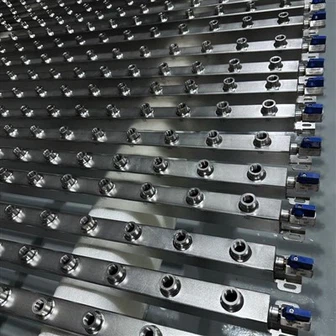
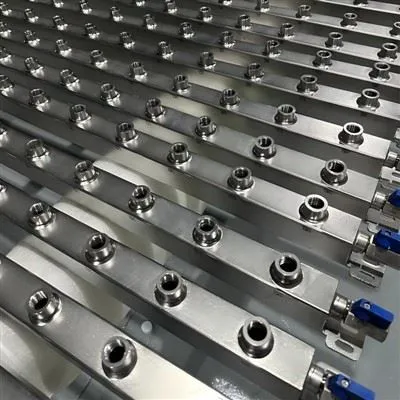
Real cases best illustrate the issue. A third-party data center in East China once used ordinary industrial-grade stainless steel welded pipes in its first-phase project. After 14 months of operation, during the high-load summer period, a column of server racks' manifold below one row of pipes showed a trace of leakage. Due to the extremely small leakage volume, it was not promptly warned, and ultimately, a server node equipped with an H100 accelerator card was completely scrapped. After disassembly and analysis, the leakage point was precisely the gas holes in the longitudinal weld of the pipe, which expanded through-type crack. after about 4,000 cycles of cold and hot alternation. This case directly pushed for the replacement of all pipes in the second-phase project with precision cold-rolled seamless stainless steel pipes, and strictly specified the material standards. So far, a record of zero leakage for three years has been maintained.
Among various materials, austenitic stainless steel pipes, with their outstanding physical and chemical properties, have become the key to solving these pain points. Compared with carbon steel pipes prone to rust, copper pipes with electrochemical corrosion risks, and plastic pipes prone to aging and hardening, stainless steel pipes have an irreplaceable advantage. Especially the SUS304 stainless steel liquid cooling pipes, with high tensile strength, smooth inner walls, and the ability to effectively prevent impurities from blocking the micro channels of the cooling plate, are the preferred choice for inland conventional data centers. For coastal, high-humidity environments, or submerged fluorine-based liquid cooling scenarios, SUS316 stainless steel liquid cooling pipes (including the 316L low-carbon version) have extremely strong resistance to chloride ion pitting corrosion due to the addition of molybdenum, providing higher-level security protection for high-value assets.


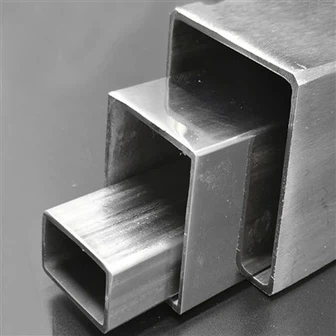
As a professional supplier of liquid cooling pipelines, China Super Tech Co., Ltd. fully understands the significance of "zero leakage" for data centers. We focus on producing high-quality stainless steel liquid cooling pipes and our main products are the market-proven 316 series and 304 series. We know that only by controlling the material from the source can we eliminate potential risks later. Therefore, we have established a strict quality control system to ensure that each pipe has uniform wall thickness, excellent fatigue resistance, and reliable welding adaptability, providing a solid physical barrier for your liquid cooling system.
To meet the rapid delivery requirements of the international market, we have made adequate preparations in supply chain management. China Super Tech has a large stockpile, covering a full range of specifications from outer diameter Φ6mm to Φ168mm and wall thickness 0.8mm to 4.0mm. Standard products can be shipped quickly, significantly shortening the construction period for customers. At the same time, we offer flexible one-stop customization services, including pipe end fixed-length cutting, inner wall degreasing and passivation, and third-party testing and certification. Whether you need to supply a batch of new intelligent computing centers or urgently need to modify the existing data center with non-standard parts, our ample stock and professional technical support can provide you with the most timely and reliable guarantee.

Contact us to get the best data center liquid cooling solution for you.

Q1: What is the main difference between 304 and 316 stainless steel tubes for liquid cooling?
A: The key difference is corrosion resistance. 304 stainless steel is cost-effective and suitable for inland data centers using deionized water or glycol coolant. 316 stainless steel contains Molybdenum, offering superior resistance to chloride ion corrosion, making it essential for coastal data centers, immersion cooling, or high-density GPU environments.
Q2: How do you ensure your stainless steel pipes won't leak due to thermal cycling?
A: We use precision cold-rolled seamless manufacturing processes to ensure uniform wall thickness and high tensile strength. Our 316 and 304 pipes undergo rigorous hydrostatic testing and material traceability checks. Unlike standard welded pipes, our products are designed to withstand the constant thermal expansion and contraction of data center cooling loops without developing fatigue cracks.