316 Liquid Cooling Manifolds: Precision-Engineered For AI Data Center Thermal Management
316 Liquid Cooling Manifolds: Precision-Engineered for AI Data Center Thermal Management
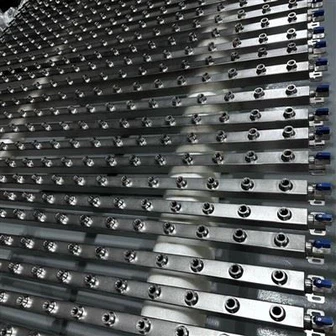
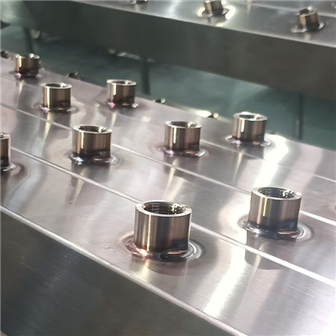
316 Liquid Cooling Manifolds from China Super Tech Co., Ltd. are precision-fabricated stainless steel distribution components engineered for AI data center cooling loops, CDU systems, and immersion cooling applications. These manifolds combine 316L stainless steel construction with internal surface roughness down to Ra ≤0.4 μm, orbital welding per ISO 3834, and 100% leak inspection before shipment. The result is a clean, reliable, and application-focused manifold solution for high-density computing thermal management.
ISO 9001:2015 · ISO 3834 · CE · RoHS | 11+ Years · 12,000 Tons/Year · 20+ Countries · 600+ Projects
Get a Quote - Engineering Response Within 24 Hours
Why Manifold Quality Determines Cooling System Reliability
The manifold is the distribution heart of a liquid cooling loop. It directs coolant to server cold plates, CDU branches, immersion cooling zones, and other thermal management components. When manifold quality is compromised, the reliability of the entire cooling system can be affected.
Leakage Risk
A pinhole weld defect can result in coolant leakage, equipment downtime, and costly maintenance. For high-density AI server environments, reliable welding and leak testing are essential to maintaining system availability.
Contamination Risk
An excessively rough internal surface can promote particle accumulation and affect coolant cleanliness. Controlled internal roughness helps support stable coolant circulation and reduce contamination-related risks.
Corrosion Risk
Improper material selection can increase the risk of pitting and corrosion, particularly in glycol-based or chloride-containing cooling environments. 316L stainless steel provides improved corrosion resistance for demanding liquid cooling applications.
Dimensional Inconsistency
Poorly formed manifolds can create installation stress at connections and make system integration more difficult. Precision forming and drawing-based customization help maintain dimensional consistency throughout the assembly.
316 Liquid Cooling Manifolds vs. Conventional Manifolds
| Performance Item | China Super Tech Manifolds | Conventional Manifolds | Value |
|---|---|---|---|
| Internal Roughness | Ra ≤0.4 μm | Ra 0.8–1.6 μm | 50–75% smoother |
| Welding Control | ISO 3834 + Orbital Welding | Manual Welding | More consistent weld penetration |
| Leak Testing | 100% Inspection Before Shipment | Batch Sampling | Every unit is tested |
| Material Traceability | Full MTR Per Batch | Limited Documentation | Complete quality traceability |
| Customization | Full OEM/ODM | Standard Configurations | Application-specific layouts |
| Standard Lead Time | 7–15 Days | 20–30 Days | Faster project deployment |
| Long-Term Cost | Reduced maintenance and leakage risk | Higher potential maintenance costs | Designed for lower lifecycle cost |
Manufacturing Process
1. Material Verification
Chemical composition is verified according to ASTM A312 requirements through spectrometer analysis, with EN 10204 3.1 material certification available for traceability.
2. Precision Tube Forming
Precision forming equipment is used to control manifold dimensions and maintain dimensional consistency. Dimensional control can reach ±0.05 mm depending on the component design.
3. Orbital Welding
Orbital welding is performed according to ISO 3834 quality requirements. Welding parameters are controlled and recorded for individual joints to improve consistency.
4. Internal Surface Treatment
Internal surfaces can be treated through polishing, pickling, and passivation. Surface roughness is measured according to ISO 4287, with precision applications available down to Ra ≤0.4 μm.
5. Customized Forming and Assembly
CNC bending, manifold fabrication, and assembly are available according to customer drawings. Engineering teams review dimensional and connection requirements before production.
6. Multi-Stage Quality Control
Incoming, in-process, and final inspections cover material verification, dimensional inspection, visual inspection, pressure testing, and documentation review.
7. Clean Packaging
Finished manifolds are protected against contamination and packaged in export-grade wooden crates with anti-corrosion wrapping for international transportation.
Core Components
316L Stainless Steel Tubing
316L stainless steel, UNS S31603, is used for demanding liquid cooling applications. Its molybdenum content provides improved resistance to pitting in chloride-containing environments.
Orbital Welding System
Automated orbital welding technology provides controlled welding parameters and consistent joint quality, reducing variability during manifold fabrication.
Sealing Components
Sealing components can be selected according to the coolant and connection requirements, including compatibility with glycol-water and dielectric cooling systems.
Quality Inspection System
Incoming Inspection
Chemical composition and material certificates are verified according to applicable ASTM A312 requirements. Non-conforming material is rejected before entering production.
In-Process Inspection
Dimensional checks are performed during forming to maintain the specified tolerances and ensure consistency between components.
Weld Inspection
Welds undergo visual inspection and penetrant testing where required. Welding quality can be controlled according to ISO 5817 requirements.
100% Leak Testing
Every manifold undergoes leak testing before shipment. Pneumatic testing can be performed at 1.5× the working pressure according to application requirements.
Surface Verification
Internal surface roughness is measured according to ISO 4287 to confirm the specified Ra value.
Final Audit
Final documentation, inspection records, packaging, and traceability are reviewed before shipment.
Defect Rate: ≤0.3%
Third-Party Inspection: SGS / TÜV / BV Available Upon Request
Customization Capability
Custom Manifold Shapes
Straight, bent, custom profiles, and integrated manifold assemblies can be manufactured according to application requirements.
Flexible Connection Options
Available connection methods include threaded, welded, flanged, and compression fittings.
Customized Port Configurations
Port quantity, spacing, inlet/outlet orientation, and connection layouts can be manufactured according to customer drawings.
Controlled Surface Finish
Standard surface roughness can range from Ra 0.4–0.8 μm, while precision applications can be manufactured to Ra ≤0.4 μm.
Application-Specific Pressure Ratings
Working pressure can be customized according to the cooling system design, manifold geometry, material, and operating conditions.
Customization Process
Requirement Confirmation → Engineering Drawing Review → Prototype Production → Customer Approval → Mass Production → QC & Delivery
China Super Tech supports OEM/ODM manifold development from initial drawings through prototype qualification and volume production. Engineering drawing review is available before order confirmation.
Applications Across High-Performance Cooling Industries
| Industry | Typical Application | Recommended Specification | Operating Environment |
|---|---|---|---|
| AI Data Centers | CDU + Server Cold Plate Distribution | 316L, Ra ≤0.4 μm, 10–40 mm | 15–45°C, Glycol-Water Coolant |
| Immersion Cooling | Dielectric Fluid Circulation Manifolds | 316L, Chemical Compatibility Verified | Sealed Cooling Environment |
| Energy Storage | Battery Thermal Management | 304/316L, Compact Manifold Design | −20 to 60°C, Thermal Cycling |
| Telecommunications | Edge Computing Cooling Distribution | 316L, Precision Dimensions | Outdoor Enclosures, Variable Climate |
Customer Feedback
"China Super Tech's manifolds passed our 100% helium leak testing on the first batch - every single piece. That has never happened with a previous supplier."
Verified customer references are available upon request.
Frequently Asked Questions
Q1: What internal surface roughness does the 316 Liquid Cooling Manifold achieve?
The internal surface roughness can be controlled to Ra ≤0.4 μm and verified according to ISO 4287 using a surface profiler. This controlled finish helps reduce particle accumulation and supports stable coolant circulation.
Q2: What welding standards apply to the manifold connections?
Welding follows ISO 3834 quality management requirements and can use orbital welding technology to provide consistent weld penetration. Weld quality can also be verified according to ISO 5817 requirements.
Q3: How is the manifold tested for leaks before shipment?
Every manifold receives leak testing before shipment. Pneumatic testing can be performed at 1.5× the working pressure according to the application and agreed testing requirements. Any unacceptable pressure decay results in rejection.
Q4: What is the lead time for standard and customized manifolds?
Standard manifolds typically ship within 7–15 days. Customized manifolds, including drawing review, prototyping, and production, typically require 3–4 weeks, depending on design complexity and order quantity.
Logistics & Delivery
Annual Production Capacity
12,000 tons/year
Standard Lead Time
7–15 days
Expedited Delivery
Available upon request depending on production capacity and project requirements.
Packaging
Export-grade wooden crates with anti-corrosion wrapping.
Samples
Samples are available, with typical delivery within 7–10 days.
Request a Quote
To receive a technical quotation, please provide:
Company Name
Email Address
Product Specifications
Required Quantity
Application
Customer Drawings, if available
Required Delivery Date
RFQ Quick Form
Submit your requirements for a technical and commercial evaluation.
WhatsApp Instant Contact
Contact our engineering team directly for faster communication.
Technical Consultation
Discuss manifold geometry, material selection, connection methods, coolant compatibility, pressure requirements, and surface finish with our engineering team.
Sample Request
Request samples for qualification and application testing before volume production.
Response Commitment: A Manufacturer Engineer Responds Within 24 Hours.
Current production slots for Q3 are being allocated. Early confirmation helps secure your preferred delivery window.
Last Updated: 2026