The Liquid Cooling Shift in The Nvidia GB300 Era: Why Data Centers Are Ditching Air
If you've been keeping an eye on the data center hardware space lately, you've probably heard the big news: Nvidia's upcoming GB300, powered by the Rubin architecture, is going all-in on liquid cooling. There will be no air-cooled version. With the Rubin chip pulling a massive 1.8kW of power, air cooling simply isn't on the table anymore. Industry projections now show liquid cooling penetration hitting 42% by the end of the year.
But honestly, the Nvidia announcement is just a symptom of a much bigger shift. The real story here isn't just that a giant tech company is forcing a change; it's about the pure physics of modern computing. Let's break down why liquid cooling is no longer just an "option" for high-performance data centers, what makes it so much better, and the hidden hardware that makes it all work.


The 1.8kW Problem: Why Air Cooling Hit a Wall
To understand why we need liquid cooling, you have to look at the heat we're dealing with. A 1.8kW chip is essentially a space heater the size of a postage stamp.
For decades, data centers relied on air conditioning and fans to keep servers from melting. But air has a very low heat capacity. It just can't absorb and carry away heat fast enough to keep up with today's AI workloads. When you push a 1.8kW chip with air cooling, you end up with throttled performance, deafening fan noise, and massive electricity bills just to spin the fans. In short, the math doesn't work anymore. Air has hit its physical limit.
Why Liquid Cooling is the Clear Winner
So, what makes liquid cooling so much better? It comes down to basic thermodynamics. Water (and specialized coolants) has roughly 1,000 to 3,000 times the heat capacity of air.
Here is what that means in practice:
- Unmatched Heat Removal: Liquid directly pulls heat off the components, keeping your high-end chips running at optimal temperatures without thermal throttling. Your hardware runs faster, for longer.
- Massive Energy Savings: When you stop using giant HVAC systems and hundreds of high-RPM fans just to move air around, your Power Usage Effectiveness (PUE) drops dramatically. You're paying to power the servers, not the cooling system.
- Higher Density: Without the need for massive heat sinks and thick airflow channels, you can pack way more computing power into a much smaller footprint. For companies paying a premium for data center real estate, this is a game-changer.


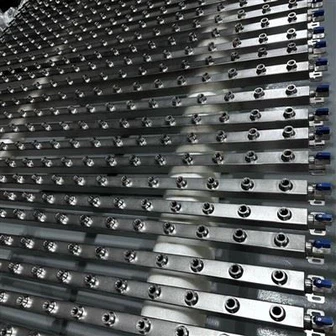
The Overlooked Bottleneck: Why Stainless Steel Liquid Cooling Tubes Matter
Here's the thing about liquid cooling: it only works if the liquid stays inside the system. A leak over a multi-million-dollar AI cluster is a career-ending disaster.
When you are pumping coolant at high pressures to dissipate 1.8kW of heat, the tubing connecting your cold plates to your CDUs (Coolant Distribution Units) becomes the most critical link in the chain. Traditional rubber or polymer tubing degrades over time. They become brittle, crack under constant thermal cycling, and can even allow coolant vapor to permeate through the walls.
This is exactly why the industry is shifting toward stainless steel liquid cooling tubes.
Stainless steel (like 304 or 316L) offers a completely impermeable barrier. It doesn't degrade under high heat, it can handle extreme internal pressures without bulging or bursting, and it resists corrosion over decades of use. It ensures the coolant stays pure and the system stays dry.
This is also where specialized manufacturers step in. China Super Tech Co., Ltd. has been at the forefront of engineering these critical components. By focusing purely on high-grade stainless steel liquid cooling tubes, they provide the kind of leak-proof, high-pressure, and corrosion-resistant infrastructure that modern AI data centers demand. When you are running a rack full of Rubin chips, you can't afford to cut corners on the pipes delivering the coolant.


The Bottom Line
The shift to liquid cooling isn't just a trend; it's the new reality of AI infrastructure. As chips get more powerful, the way we cool them has to evolve from blowing air to circulating liquid-and doing it reliably.
If you're upgrading your data center infrastructure or designing new AI server racks, you need a cooling partner that understands the stakes. Looking for reliable, high-performance stainless steel liquid cooling tubes for your next project? Reach out to the team at China Super Tech Co., Ltd. today to discuss your specifications and get a quote. Don't let inadequate piping hold your hardware back-contact us now and let's keep your servers running cool.
Contact Us
whatsapp:8615900357871
e-mail:sales@316liquidcooling.com
QR code: