316 Liquid Cooling Pipe Quenching Secrets: How Some Forgers Add Hidden Weakness

Walk into any AI data center build-out in 2025, and you will hear the same question from cooling system integrators: why does the pipe material and its internal finish matter more than the pump or the manifold?
Because the tube is where thermal performance goes to die. Specifiers in Japan, South Korea, and the US are learning that a 316 liquid cooling pipe with Ra ≤0.4 μm internal roughness is not a luxury. It is now the baseline for preventing premature heat exchanger fouling and glycol degradation in high-density racks.
This article explains what separates a precision-engineered 316 liquid cooling pipe from conventional sanitary tubing, and how to evaluate suppliers before you commit to a 5,000-unit order.
Why 316L Stainless Steel Became the Default for Liquid Cooling Loops
316L stainless steel contains molybdenum (2.0–3.0%), which gives it significantly better resistance to pitting and chloride attack than 304 grade. In a closed loop running 25–30% propylene glycol at 45°C, the coolant becomes mildly corrosive over time. 316L resists this. 304 does not, and will show surface pitting within 18–24 months in aggressive conditions.
The "L" designation means low carbon (≤0.03%). This prevents carbide precipitation at weld boundaries during heat input, preserving corrosion resistance right at the joint where failures occur.
According to ASTM A312, the standard specification for seamless and welded austenitic stainless steel pipe, 316L must maintain minimum tensile strength of 485 MPa. But the standard defines chemistry and minimum mechanical properties. It does not control internal surface roughness, weld bead profile, or cleanliness - the three properties that determine liquid cooling performance.

Here is what to check at a glance:
| Property | What Standard Covers | What Liquid Cooling Requires |
| Chemical composition | ASTM A312 / JIS G3459 | 316L, low carbon, Mo 2.0–3.0% |
| Tensile strength | ≥485 MPa per ASTM A370 | Same, plus weld joint integrity |
| Internal surface roughness | Not specified in pipe standards | Ra ≤0.4 μm for precision loops |
| Cleanliness | Not specified | Particle-free, no residual oils |
| Leak integrity | Pressure test per schedule | 100% inspection, helium option |
The Hidden Cost of Conventional Tubing in Cooling Loops
A piping distributor in Singapore recently told us about a retrofit project where the customer saved 18% on pipe cost by choosing standard industrial tubing over a precision-finish 316 liquid cooling pipe. Eight months later, the system showed a measurable 11% heat transfer degradation across the CDU due to micro-particle accumulation on the inner wall.
The cost of rework and coolant replacement exceeded the initial savings by a factor of three.
This is the pattern we see across markets - from Mumbai to Dallas. Buyers frequently encounter batch variation, where sample approval passes but mass production tubes come with inconsistent wall thickness or weld bead protrusion. The root cause: suppliers without in-house surface treatment and welding control treat every order as standard pipe production.
A simple rule for engineers: if your internal roughness spec is Ra 0.8 μm or higher, you are designing for particle accumulation, higher pump energy demand, and a coolant replacement cycle that shortens by 12 to 18 months.
Internal Roughness: The Parameter Most Buyers Overlook
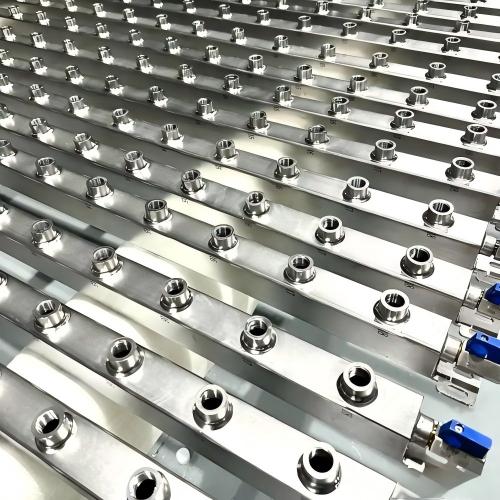
Industry data indicates surface roughness is the single most under-specified parameter in liquid cooling pipe procurement. Standard industrial pipe typically delivers internal roughness between Ra 0.8 and 1.6 μm. That surface, under a microscope, looks like a ridged landscape - the perfect trap for suspended particles, biofilm precursors, and degraded glycol byproducts.
A 316 liquid cooling pipe with Ra ≤0.4 μm provides a flow path that is 50% smoother than industry conventional. What this means at system level:
- Reduced particle accumulation - smoother walls mean fewer anchor points for contaminants
- Lower pump energy consumption - less friction loss across the entire loop
- Extended coolant life - fewer nucleation sites for degradation products
- Stable heat transfer - film coefficient remains consistent over 5-year operation
One OEM engineer told us: "The biggest concern is not the sample quality, but whether every batch can maintain the same standard." That is why batch-wise roughness verification matters more than any single sample report.
Orbital Welding and Leak Prevention: Non-Negotiable for Reliability
Welding is where liquid cooling pipes fail. A pinhole defect in a conventional weld can take down an entire GPU rack for days. The failure cost is not the pipe - it is the $3–5 million of compute hardware sitting idle above a slow drip.
China Super Tech applies ISO 3834-based welding quality management with orbital welding technology. Orbital welding automates the torch rotation, eliminating human inconsistency in travel speed and arc gap. The result is a uniform weld bead with consistent penetration - the single most effective control against micro-leakage.
Every 316 liquid cooling pipe is leak-tested before shipment. For critical applications, helium leak detection is available, which catches defects 100 times smaller than conventional pneumatic testing.
A fabrication manager for an energy storage integrator told us: "A small leakage problem in liquid cooling can create a very expensive failure." That single sentence should guide every supplier qualification decision.

Evaluating a 316 Liquid Cooling Pipe Supplier: A 5-Point Checklist
Before you issue an RFQ, verify these five items with any candidate supplier:
- In-house manufacturing coverage - Does the supplier control forming, welding, and surface treatment internally? Multi-vendor coordination creates quality responsibility gaps. In our experience, material and process consistency suffer most when steps are outsourced.
- Internal roughness verification method - Ask for Ra measurement reports per ISO 4287. If the supplier cannot cite the test method, the value they quote is not verifiable.
- Welding certification level - ISO 3834 certification demonstrates controlled welding procedures. Without it, weld quality depends on operator skill alone.
- Batch traceability - Can the supplier trace a production batch back to raw material heat numbers and weld operator records? This is the difference between a manufacturer and a trader.
- Leak testing practice - 100% inspection before shipment is the minimum. Confirm the method: pneumatic pressure test, or helium mass spectrometry for critical loops.
How China Super Tech Approaches Liquid Cooling Pipe Manufacturing
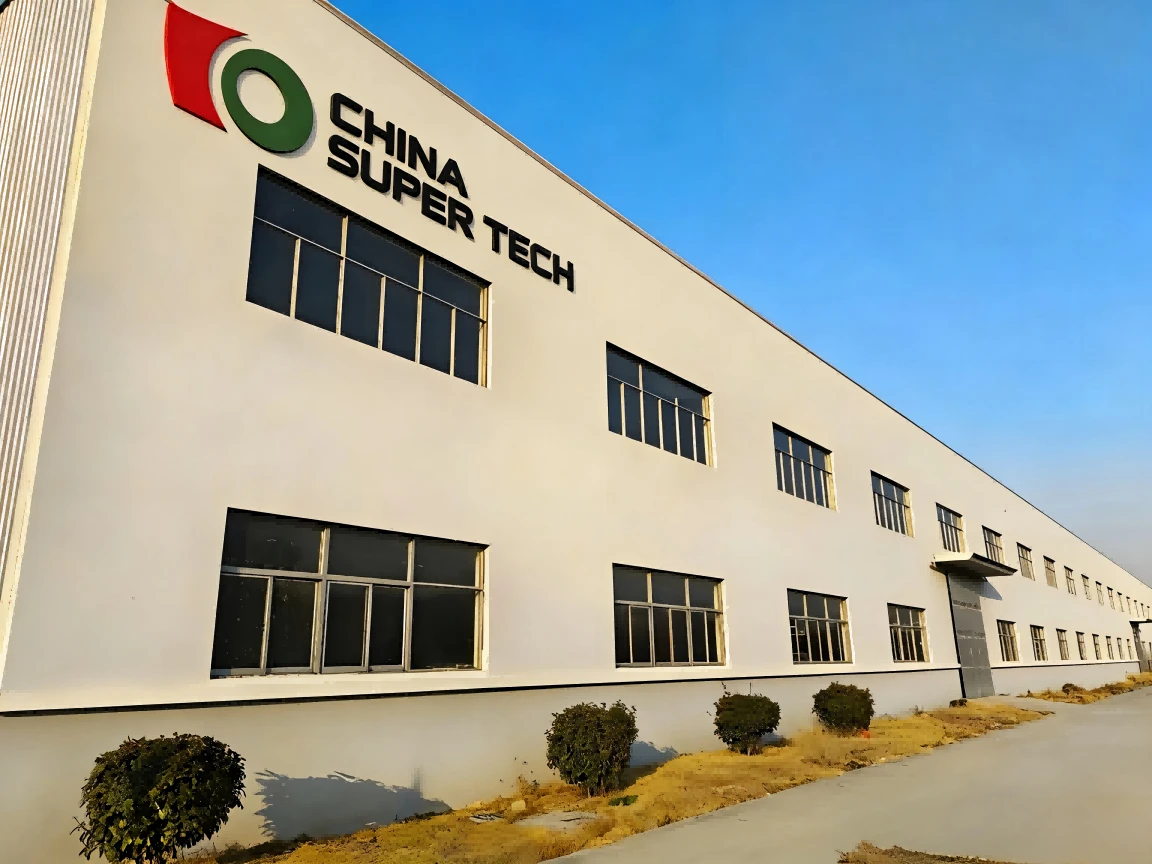
China Super Tech Co., Ltd. has manufactured liquid cooling components for 11+ years, with 12,000 tons annual production capacity and exports to 20+ countries. Our 316 liquid cooling pipe production follows a dedicated process designed around cooling-specific risks.
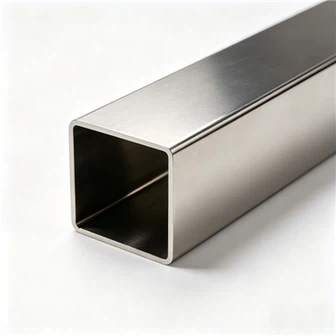
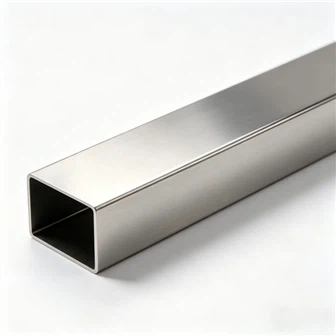
The process begins with material verification, where each 304/316L batch is confirmed by chemical composition and material certification against ASTM A312. Precision tube forming controls outer dimension from 10×10 mm to 80×80 mm square sections, wall thickness 0.5–3.0 mm, and length up to 6000 mm. Unlike general pipe mills, we combine tube forming, orbital welding, pickling, passivation, machining, and assembly under one roof.
Internal surface optimization is a separate manufacturing stage, not an afterthought. Through polishing and passivation, we achieve Ra ≤0.4 μm - the level required for AI data center coolant loops where particle contamination directly impacts server reliability. Every finished tube passes multi-stage inspection: dimensional measurement, weld inspection, surface verification, and 100% leak testing before packaging in clean, anti-contamination wrapping.
We hold ISO9001, ISO14001, ISO45001, ISO3834, CE, and RoHS certifications. Products supplied to 600+ customer projects across data center and industrial thermal management.
Regional Supply Considerations
Each market has distinct preferences. Japanese integrators prioritize cleanliness documentation and batch traceability above all. Korean customers typically demand JIS G3459 compliance alongside ASTM references. Middle Eastern projects often require fast delivery due to aggressive project timelines, which favors suppliers with in-house production rather than export brokers.
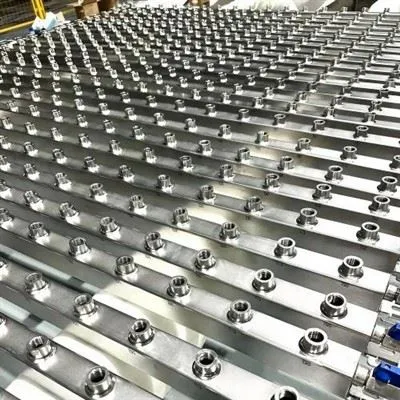
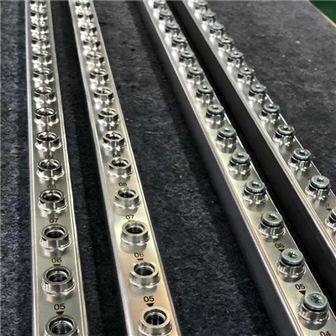
If your project requires custom bends, manifolds, or complete liquid cooling assemblies, verify the supplier's fabrication capability beyond straight tube supply. A supplier that can manufacture complex geometries in-house will reduce your installation complexity and supplier coordination burden.
The Bottom Line for Your Next RFQ
The 316 liquid cooling pipe you specify today determines the reliability of your cooling system for the next decade. Three parameters matter most: internal roughness, weld integrity, and batch consistency.
Internal roughness Ra ≤0.4 μm is the new baseline
ISO 3834-controlled welding with 100% leak testing is mandatory
Batch-wise verification should anchor your supplier qualification
We manufacture 316 liquid cooling pipes and deliver to 20+ countries. Our engineering team responds within 24 hours with material certifications, test methods, and volume pricing.
[Request a Quote] - engineering reply within 24 hours
Specification check: 316L per ASTM A312, square tube 10×10 mm to 80×80 mm, wall thickness 0.5–3.0 mm, internal Ra ≤0.4 μm per ISO 4287, 100% leak tested. ISO9001 / ISO3834 / CE / RoHS certified. 11+ years, 12,000 tons/year, 600+ projects.
FAQ
What is the difference between 304 and 316L for liquid cooling pipes?
+
-
The key difference is molybdenum content. 316L contains 2.0–3.0% Mo, making it significantly more resistant to pitting and chloride corrosion. For glycol-based coolants in AI server loops, 316L provides longer service life. 304 is suitable for pure water or deionized water systems where corrosion risk is lower.
How is internal surface roughness measured on liquid cooling pipes?
+
-
Internal roughness (Ra) is measured using a surface profilometer per ISO 4287. The probe traverses the internal wall and records average surface deviation. For our 316 liquid cooling pipes, Ra ≤0.4 μm is verified on a per-batch basis, not just on samples.
What are the minimum order quantities for custom-size 316 liquid cooling pipes?
+
-
Standard sizes have flexible MOQs starting from a single production batch. Custom dimensions - including square tubes from 10×10 mm to 80×80 mm, wall thickness 0.5–3.0 mm, and lengths up to 6000 mm - are confirmed after drawing review. Our engineering team responds within 24 hours with feasibility and lead time.
How do you ensure batch consistency in mass production?
+
-
Batch consistency is controlled through in-house production, from raw material verification to final shipping. Every batch is tested for chemical composition, dimensional accuracy, surface roughness, and leak integrity. We maintain full traceability back to heat numbers, which is why 600+ customers trust us for mass production.
What is the standard lead time for a 316 liquid cooling pipe order?
+
-
Standard lead time is typically 7–15 days for in-stock sizes and 15–25 days for custom specifications, depending on quantity and complexity. Expedited options are available for urgent projects. Contact us for an exact lead time based on your specification.