Structure Of U-shaped Bent Stainless Steel Pipe
This structure involves processing straight pipes into a U-shape using cold or hot bending processes. It is widely used in heat exchangers, piping systems, and mechanical structures.
The structure of U-shaped stainless steel pipes mainly consists of a bent pipe body, straight pipe sections at both ends, bending radius, and wall thickness distribution. Precision manufacturing processes ensure structural strength and fluid flow under complex operating conditions.
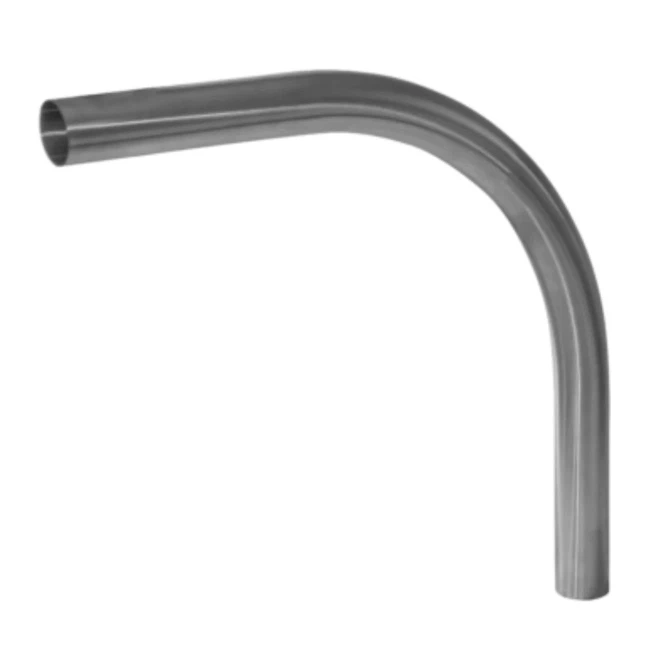
The U-shaped bend (core deformation zone) involves uniformly bending the middle of the pipe into a semi-circle or a large-radius arc, forming a U-shaped structure. The bending angle is typically 180°, but incomplete U-shapes can be customized upon request.
During the bending process, a mandrel is used to support the inner wall to prevent collapse and wrinkling, ensuring consistent inner diameter. The outer side of the bend is subjected to tensile stress, while the inner side is subjected to compressive stress; therefore, extremely high requirements are placed on material ductility and process control.
Structure of U-shaped Stainless Steel Pipes
This structure involves processing straight pipes into a U-shape using cold or hot bending processes. It is widely used in heat exchangers, piping systems, and mechanical structures.
The structure of U-shaped stainless steel pipes mainly consists of a bent pipe body, straight pipe sections at both ends, bending radius, and wall thickness distribution. Precision manufacturing processes ensure structural strength and fluid flow under complex operating conditions.
Straight pipe sections at both ends (connection and installation area): A certain length of straight pipe section is retained on both sides of the bend for connection to flanges, welds, or other pipes.
The length of the straight pipe section can be customized according to project needs, with a common range of 300mm–1500mm to meet on-site assembly requirements.
In heat exchanger applications, the straight pipe section is often inserted into the tube sheet holes and sealed by welding to ensure a leak-free system.